This blog covers the Kelowna and Central Okanagan real estate market with straightforward information you can actually use. You'll find local market stats, buyer education, neighbourhood breakdowns, and commentary on what's happening in the Okanagan. No fluff. Written by Michael A. Jones - PREC*, a REALTOR® with Royal LePage Kelowna.
By Michael A. Jones – PREC* | Royal LePage Kelowna
If you're sitting out of the Kelowna or Okanagan housing market—waiting for bigger price drops—you’re not alone. But you might be late to the party.
Here’s What the Data Shows
The latest Royal LePage Canadian Renters Report found that 54% of renters plan to buy a home—and 40% of those are waiting for home prices to decline while another 29% are waiting for interest rates to drop.
The Financial Post backs this up: “Should housing values or interest rates decline meaningfully, the door could swing wide open”.
Why This Matters in Kelowna and the Okanagan
Imagine a price or rate drop triggers:hundreds, maybe thousands of renters have financing ready. They all flood in at once. That’s supply squeezed. Competition spikes. Multiple offers return.
If you're a buyer waiting, you're not competing against just current buyers—you’re competing against a built-up wave of home-hungry buyers.
The Real Risk: Paying More, Not Less
More buyers chasing the same homes means higher bids.
Homes under ~$800K in the Okanagan sharpen fast.
What looked like a price dip could vanish under bid pressure.
By the time the “drop” happens, you could pay 5%, 10% or even 15% more than if you'd moved earlier—just to win the same home.
💡 Move With Strategy, Not Crowd
Buying while competition is low gives you leverage—with fewer buyers, more negotiating power, and motivated sellers.
If the math adds up today, greedily waiting for a unicorn discount may cost you more in the long run.
📞 Let’s Run The Numbers Together
No hype. No arm-twist. Just smart, transparent analysis—especially relevant in Kelowna, Vernon, West Kelowna, and the Okanagan Valley.
If buying now aligns with your goals and budget, let's go. If waiting makes sense, I'll tell you why. Either way, you'll know where you stand before any stampede hits.
This article is for informational purposes only and should not be considered legal, financial, or investment advice. Always consult with a qualified professional before making real estate decisions.
By Michael A. Jones – PREC* | Royal LePage Kelowna
I don’t skimp on shoes.
Tried that. They looked fine, but they hurt. They didn’t last. I ended up replacing them — and spending more in the long run. So now I buy the best pair I can afford. They fit better, feel better, and serve me longer.
Real estate works the same way.
The Choice Every Kelowna Buyer Faces
One home is affordable and “okay.” Another feels right — great layout, light, view — but it’s a bit more of a stretch.
Most people choose the cheaper one. But over time, the better home usually wins.
That’s not just opinion — it’s economics.
Flight to Quality: A Principle That Applies to Homes
In financial markets, when times get uncertain, investors move their money into safer, higher-quality assets. It’s called a flight to quality.
The same thing happens in real estate.
When markets shift, interest rates rise, or uncertainty creeps in — buyers gravitate toward homes that are:
Better located
More functional
More beautiful
Harder to replace
These homes are scarce. They stand out. And they hold up — in value, demand, and resale — even when the rest of the market softens.
What Scarcity Looks Like in Kelowna
Corner or top-floor units with natural light and privacy
Well-managed buildings with strong financials
Walkable locations with long-term appeal
Layouts that “just work” when you walk in
They’re not always cheap. But they’re what smart money buys — because desirability outperforms.
The Right Home Usually Pays Off
If a home truly feels like the right one — and it’s within range — don’t let the stretch scare you.
Ask:
“If things ever tighten up, will this still be the kind of home buyers chase?”
If the answer is yes, that’s not risky — that’s strategic.
Scarcity protects you. Desirability lifts you. And just like good shoes, the right home always proves its worth.
This article is for informational purposes only and should not be considered legal, financial, or investment advice. Always consult with a qualified professional before making real estate decisions.
Pricing a home—or deciding what to offer on one—is part art, part science. That’s where a Comparative Market Analysis (CMA) comes in. Whether you’re selling in Kelowna, buying in Vernon, or investing anywhere along the Peachland-to-Vernon corridor, understanding how a CMA works is essential.
What Is a CMA?
A CMA is a data-driven report prepared by a Realtor to estimate the market value of a home. It compares your property to similar ones that have recently:
Sold (most important)
Been listed (active comps)
Expired or been withdrawn (unsuccessful listings)
How It’s Conducted
Assess Location: Similar neighbourhoods or areas with similar buyer demand
Compare Features: Beds, baths, square footage, age, condition, lot size
Adjust for Differences: Add or subtract value for unique features (e.g., pool, suite, renovations)
Price Range Analysis: Not a single number, but a likely range to guide strategy
For Sellers: Why It Matters
Listing too high? You scare off buyers. Too low? You leave money on the table. A CMA shows what buyers are likely to pay—and what your home needs to compete.
This article is for informational purposes only and should not be considered legal, financial, or investment advice. Always consult with a qualified professional before making real estate decisions.
Buying land in British Columbia can be one of the smartest long-term real estate moves—if done right. It’s not the same as buying a home. It comes with zoning complications, hidden costs, and servicing hurdles. Whether you’re planning to build in Kelowna, invest near Vernon, or retire on an acreage in Lake Country, here’s what to know.
Zoning: The Deal Breaker
Zoning determines what you can build, and where. It also tells you what you can't do. Don’t rely on the MLS—call the city or district directly. You can also review Kelowna's official zoning bylaw for clarity.
RU, R1, R2: Single-family or multifamily homes. Each has specific setbacks and height rules.
A1 / ALR: Farmland. Building restrictions are tight. Great if you want an orchard; tough if you want to subdivide. Learn more at the Agricultural Land Commission.
Commercial/Industrial: Not for residential use. Often needs rezoning to build a home.
Servicing land is expensive. Many lots come without power, water, sewer, or internet. You’re on the hook to bring those in. For property records, try the BC Land Title and Survey Authority.
Well drilling: $10K–$30K, plus filtration if needed
Septic: Requires soil testing and permits
Power: Cost depends on distance to nearest line
Internet: Often limited to satellite in rural areas
What Kind of Land Are You Buying?
Not all land is the same. Here’s what to expect across the Okanagan. You can also look up land values at BC Assessment.
Type
Description
Considerations
Residential Lots
Urban/rural lots zoned for homes
Topography, views, restrictions
Bare Land Strata
Privately owned, shared roads
Check strata bylaws and fees
Acreages
Often agricultural or ALR
Service access is usually limited
Recreational
Cabins, off-grid parcels
May lack access, or year-round use
Leasehold
First Nations or other leased land
More complex financing, resale limits
Rezoning and OCP: A Slow Game
Planning something not allowed under current zoning? You may need a rezoning application and an amendment to the Official Community Plan (OCP). This can take 6–18 months and doesn’t always get approved. Rezoning can increase value—but only if done carefully with community support and city planning input.
For federal resources on building or financing raw land, visit the CMHC website.
Hidden Costs Add Up Fast
Even “cheap” land can get expensive fast. Watch for:
Topographic survey costs
Development Cost Charges (DCCs)
Riparian setbacks or environmental reviews
Archaeological review on certain lands
First Nations Land & Leaseholds
Many parcels near Kelowna and Westbank are on First Nations land. This land is often leasehold, not freehold. That means you’re buying the right to occupy for a fixed term (e.g., 99 years), but not owning the land itself. Financing and resale may be more complex. Always check lease terms, renewal clauses, and land governance structure.
Red Flags Before You Offer
No legal access or easement
Floodplains, steep slopes, or erosion risk
Outdated covenants on title
Zoning that doesn’t match your goal
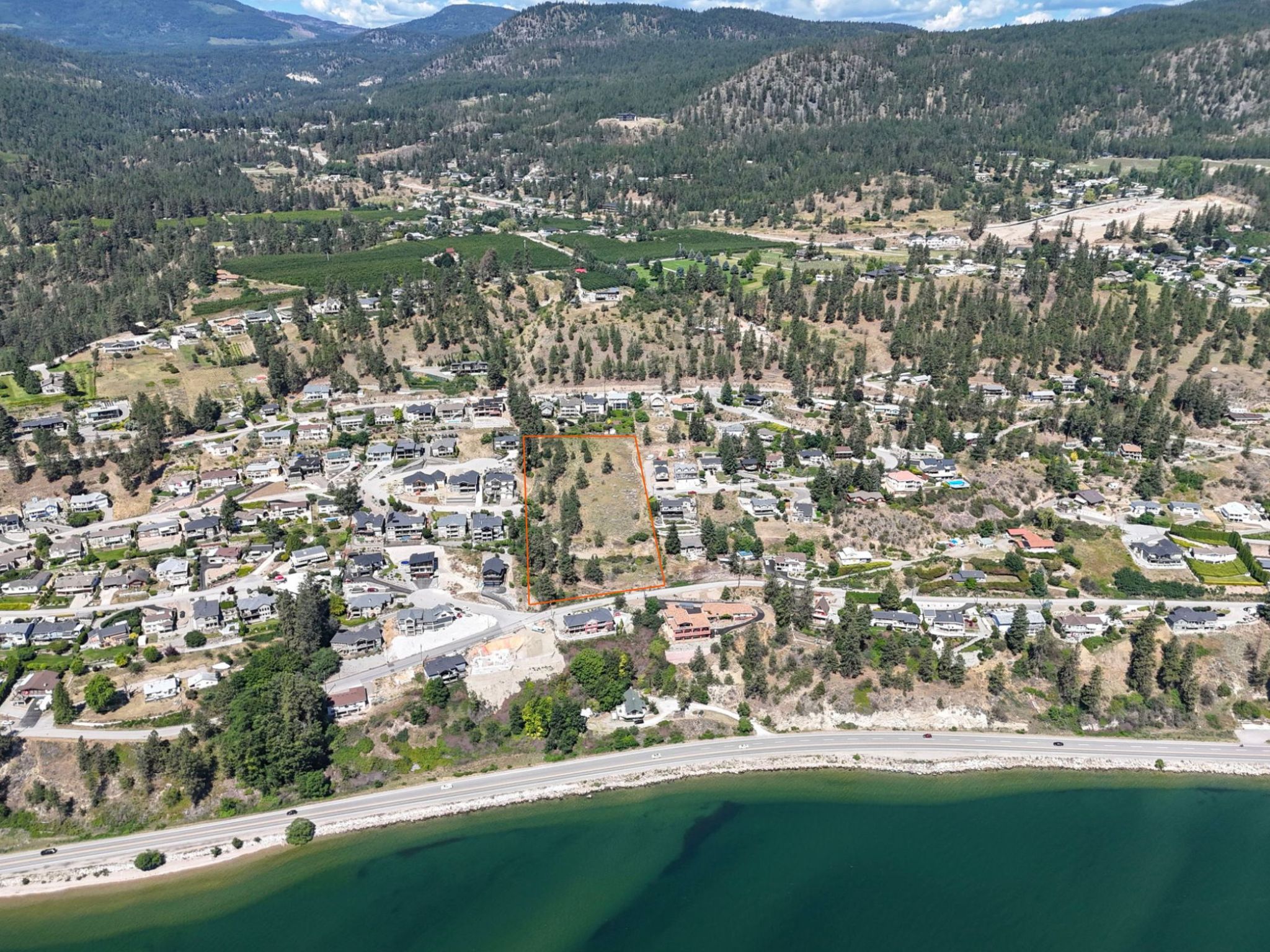
6446 Renfrew Rd. Peachland, BC - MLS#10318950
Case Study: Buying Raw Land Near Vernon
A buyer snapped up 5 acres outside Vernon. After purchase, they discovered the well water failed potability testing, and septic wasn’t viable. The lot sat empty for years. Proper due diligence would’ve changed everything.
Smart Steps to Buying Land
Check zoning and permitted uses
Review title, covenants, and restrictions
Ask city staff or a planner about servicing
Hire a builder or inspector to walk the lot
Budget for servicing and delays
Secure financing or pre-approval early
Is Land Still a Good Investment?
Yes—if it aligns with your plans and timeline. Land can outperform buildings in appreciation, especially in growing regions like Kelowna and Vernon. But you need patience, vision, and expert help.
Want help evaluating a land purchase?Get in touch and let’s talk through your goals, risks, and next steps.
This article is for informational purposes only and should not be considered legal, financial, or investment advice. Always consult with a qualified professional before making real estate decisions.
Selling your home isn’t just about putting up a “For Sale” sign. In Kelowna and across the Okanagan, a professional Realtor helps protect your equity, time, and peace of mind.
1. Pricing It Right
Price too high and you scare off buyers. Price too low and you leave money on the table. A local Realtor knows the Kelowna market and can price your home straegically based on real-time data.
2. Marketing That Works
Realtors don’t just list your home on the MLS. They market it with professional photography, compelling copy, social media campaigns, and more—targeting the right buyers for your property type and location.
3. Negotiation Skills That Protect You
Buyers come with agents. You should too. A Realtor negotiates on your behalf, shielding you from pressure and ensuring your terms, timelines, and price are respected.
4. Legal Risks Are Real
Real estate in BC comes with contracts, conditions, and liabilities. A Realtor ensures your paperwork is compliant and protects your interests from offer to closing.
5. You Get Your Time Back
Between showings, calls, emails, and questions, selling your home is a full-time job. A Realtor manages all of that while you focus on your next move.
6. More Eyes = More Offers
Realtors have networks. They alert other agents, buyers, and investors to your listing—bringing more traffic and higher offer potential, especially in competitive Okanagan markets like Kelowna and Lake Country.
7. Peace of Mind
You don’t sell homes every day. Your Realtor does. They guide you step by step, anticipate challenges, and help you stay calm and confident throughout the sale.
This post is for informational purposes only and is not intended as legal advice. Please consult with a licensed professional before making any real estate decisions.
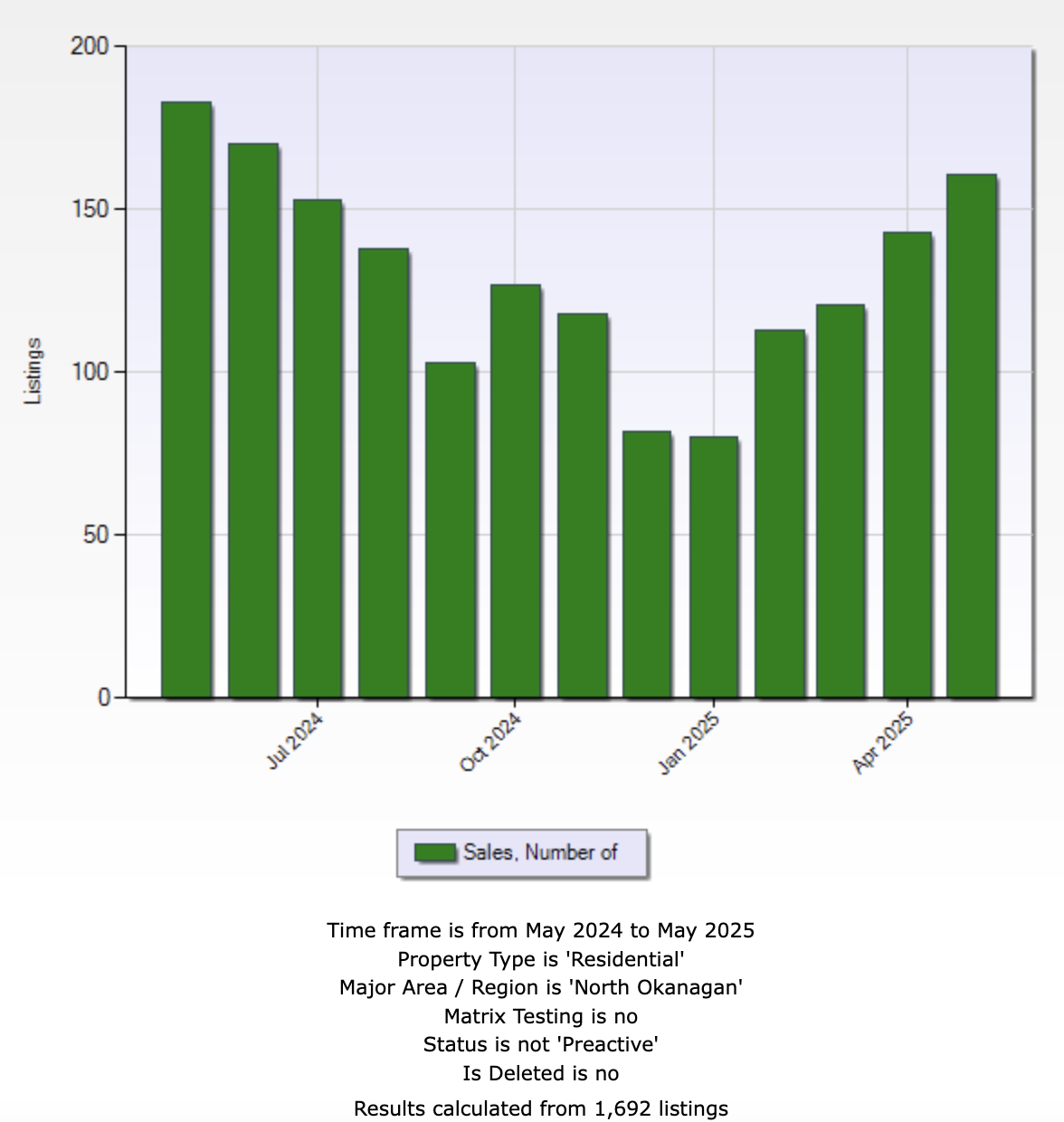
May brought a softer pace to the North Okanagan real estate market. Sales volume and transaction count dipped compared to last year, but prices remained stable across most categories. With inventory slowly building and days to sell improving, the market continues to offer balance for both buyers and sellers.
Overall Market Activity
Total Sales: 184 (down 11.96% YoY)
Sales Volume: $126.9M (down 14.7% YoY)
Active Listings: 1,622 (up 9.2% YoY)
List-to-Sell Ratio: 95.61%
Average Days to Sell: 69 (down from 75 in April)
Compared to April, total sales were up slightly and homes sold faster on average. The list-to-sell ratio improved marginally, showing that well-priced homes are still moving.
Property Type Breakdown
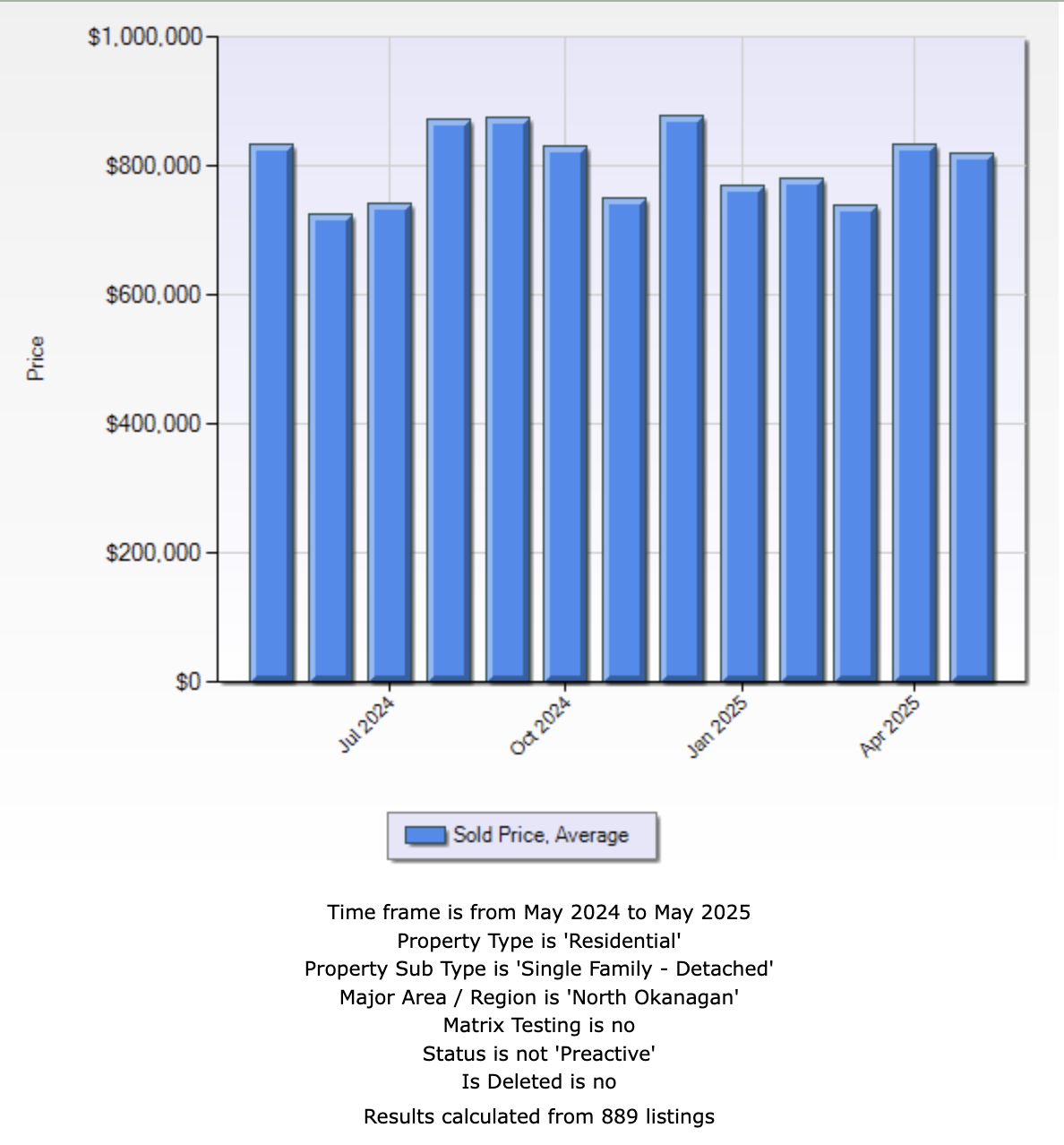
Single Family Homes (Excludes lakefront and acreages)
Sales: 82 (down 10.87% YoY)
Average Price: $819,660 (up 0.88% YoY)
Median Price: $754,500 (up 2.65% YoY)
Days to Sell: 58 (up slightly from 56 in April)
Sales volume softened compared to last year, but pricing held strong. Average price edged up and homes sold in roughly the same timeframe as April, suggesting a healthy but calmer segment.
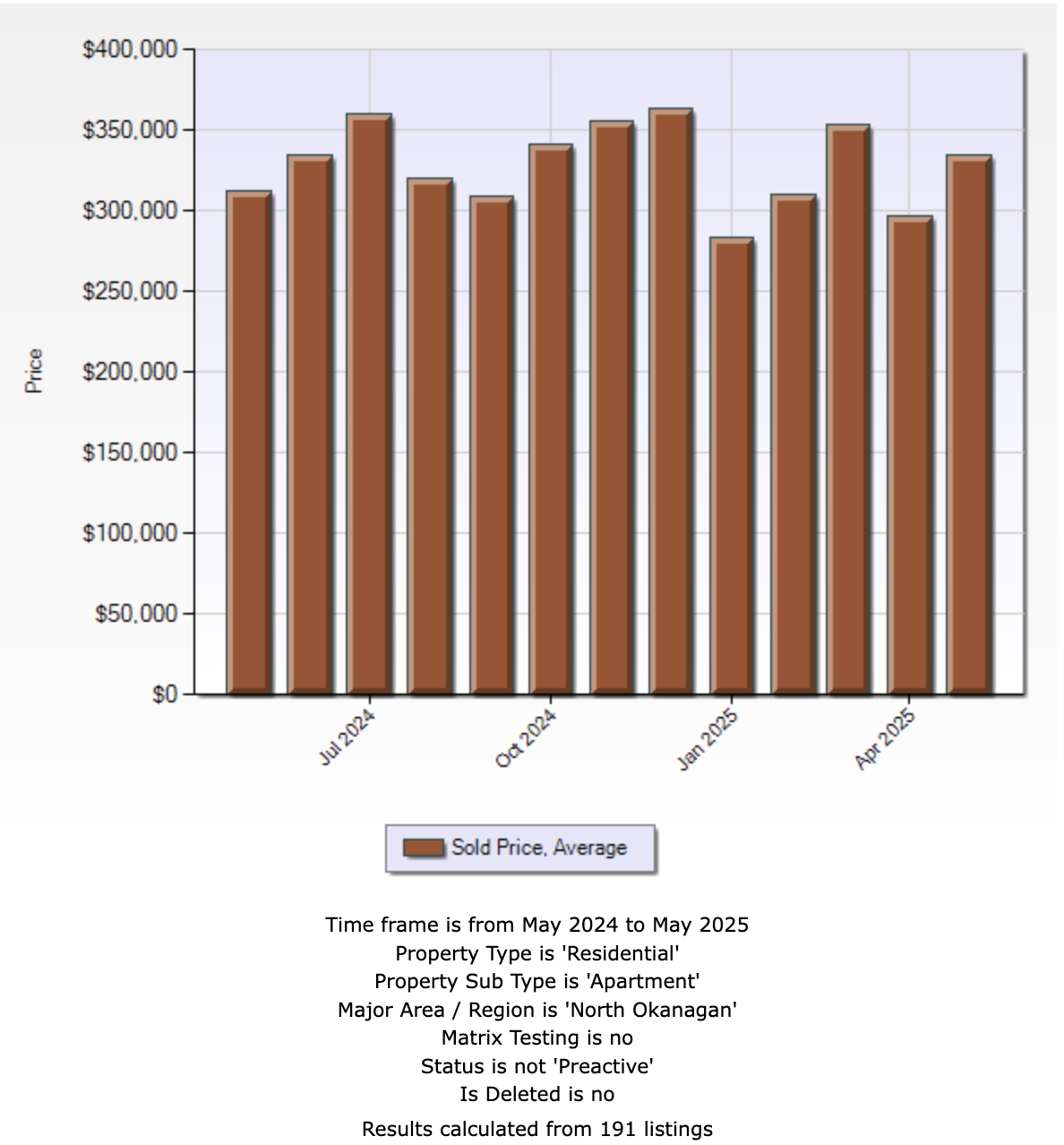
Condos / Apartments
Sales: 15 (down 31.8% YoY)
Average Price: $335,093 (up 7.1% YoY)
Median Price: $310,000 (down 2.9% YoY)
Days to Sell: 44 (down from 47 in April)
Fewer condos sold in May, but the average price was higher than last year and homes sold a little faster. Buyers are selective, but good units are still attracting strong offers.
Townhomes
Sales: 27 (down 3.6% YoY)
Average Price: $521,055 (up 7.4% YoY)
Median Price: $452,500 (flat YoY)
Days to Sell: 48 (down from 58 in April)
Townhomes remained a steady option. While sales were slightly lower than last year, prices increased, and homes moved 10 days faster than in April.
This report is for informational purposes only. Always consult with a licensed professional before making real estate decisions.
May showed a more measured pace in the North Okanagan, but with no major signs of weakness. Prices are holding, inventory is healthy, and homes are still selling. For buyers, that means more time and choice. For sellers, accurate pricing remains key to attracting offers.
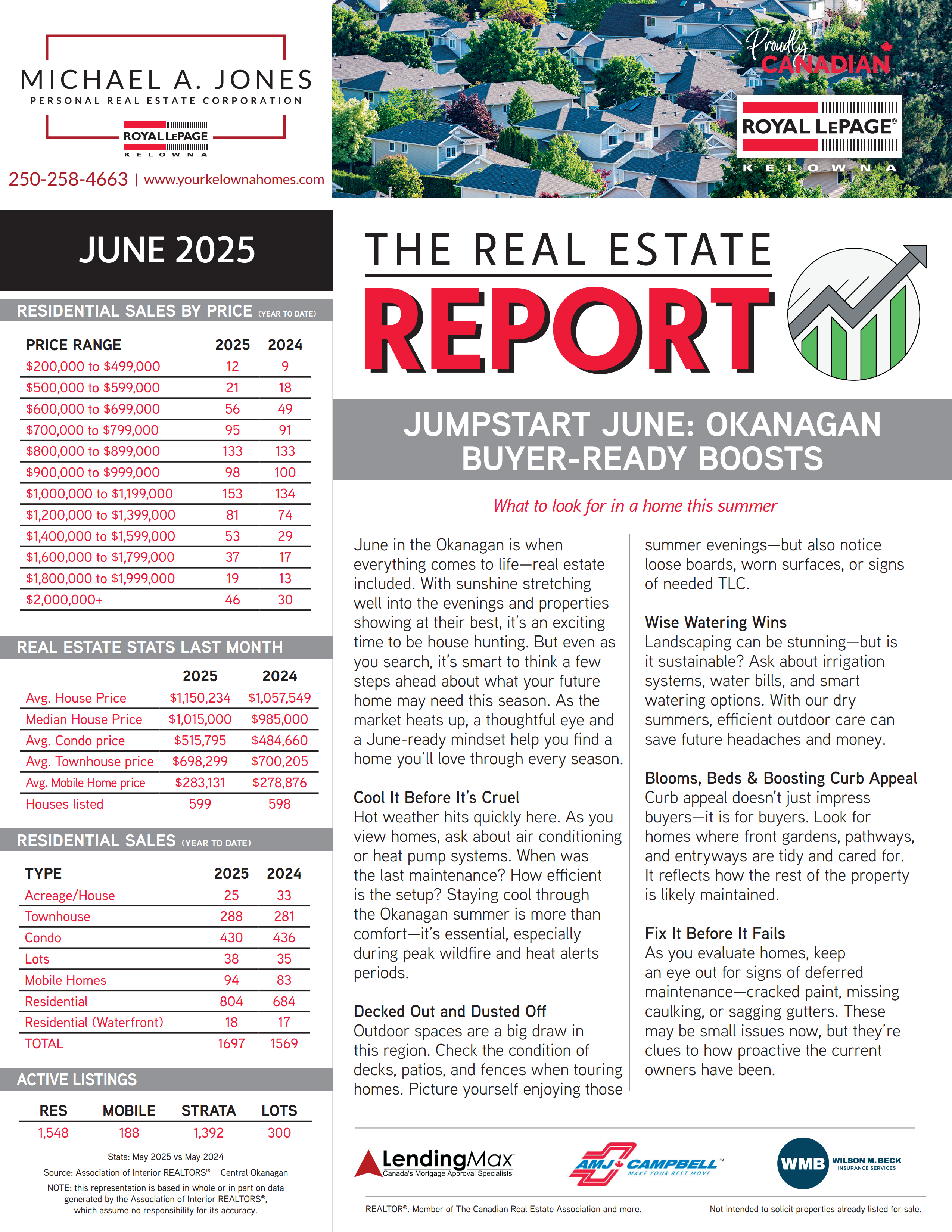
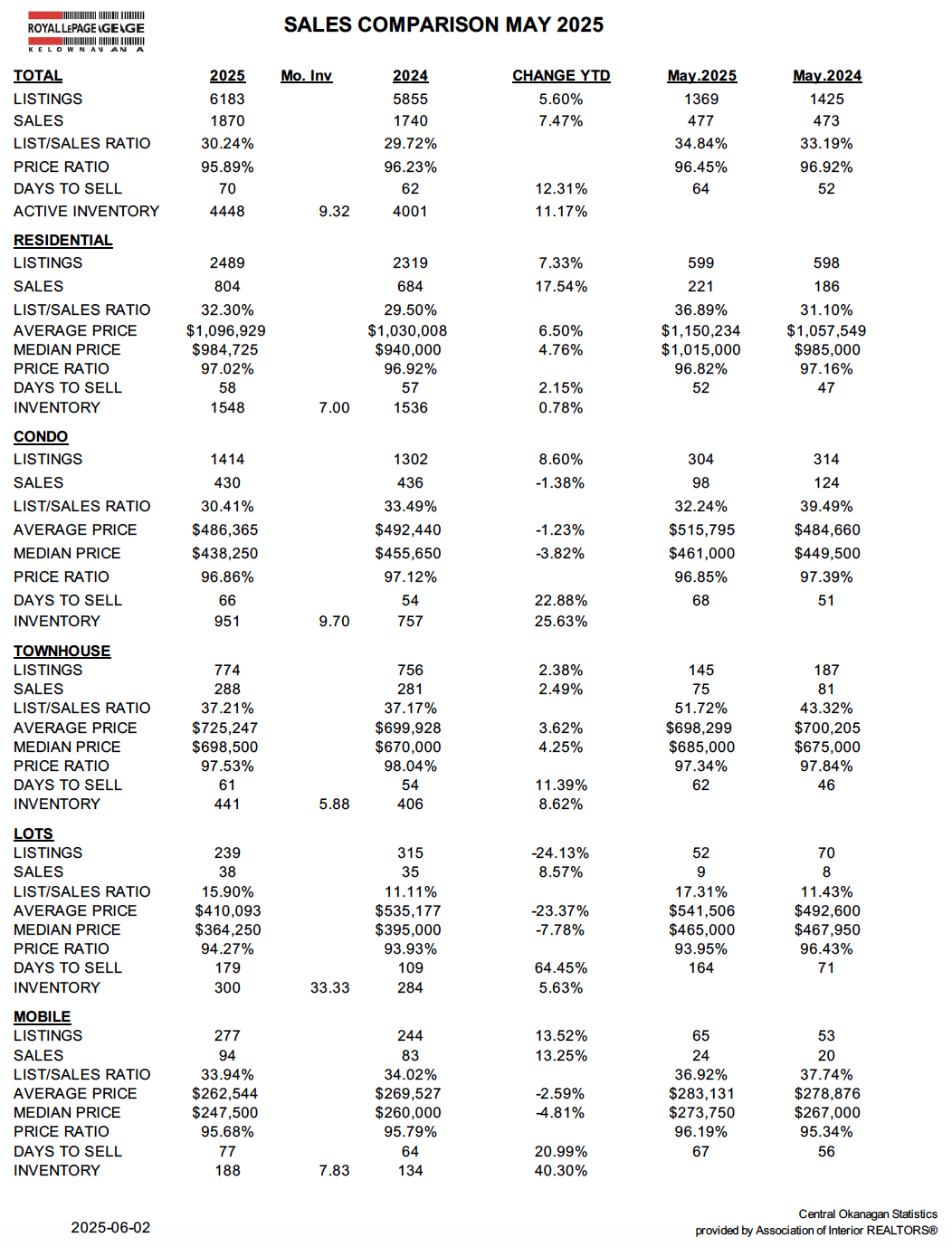
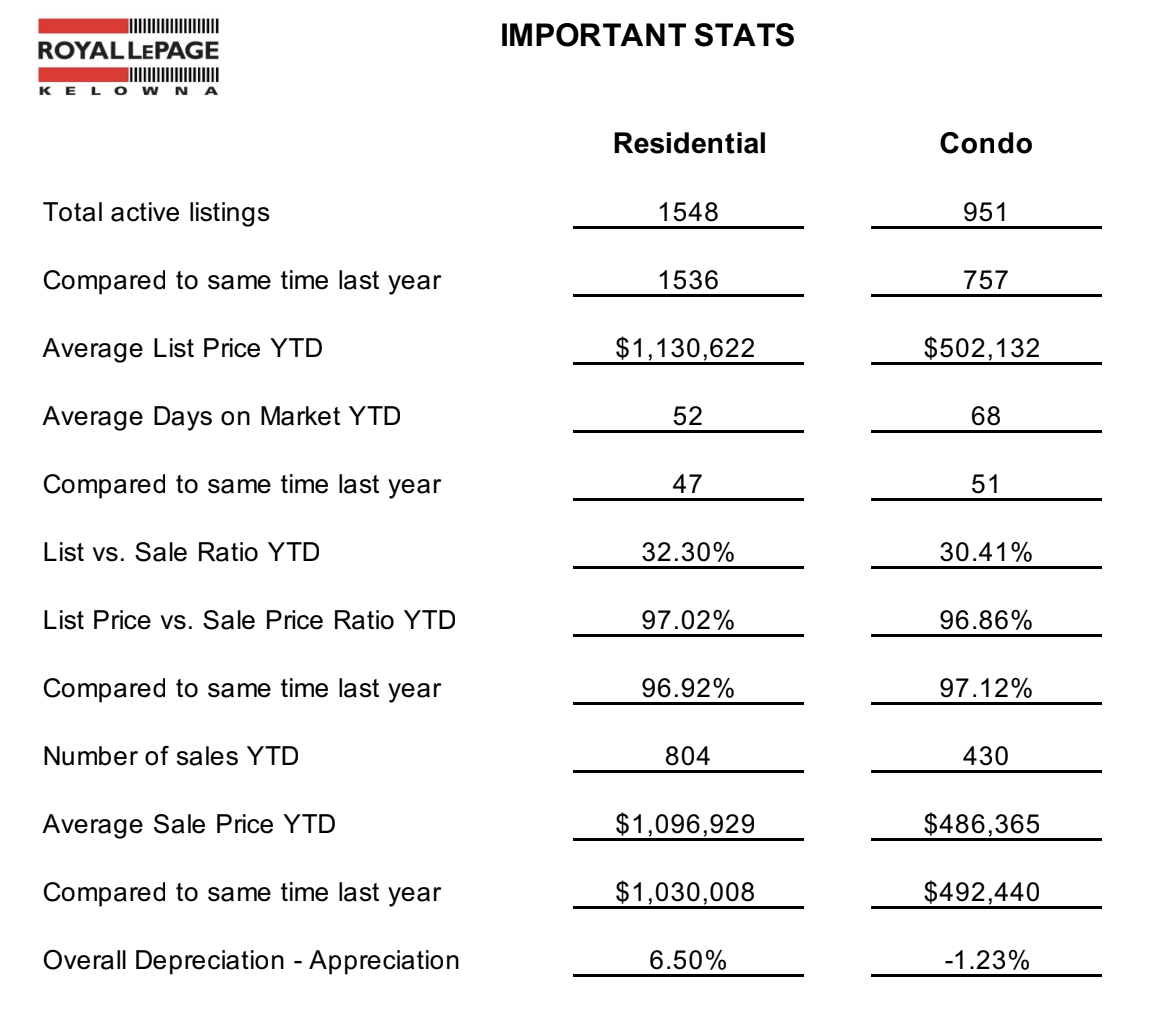
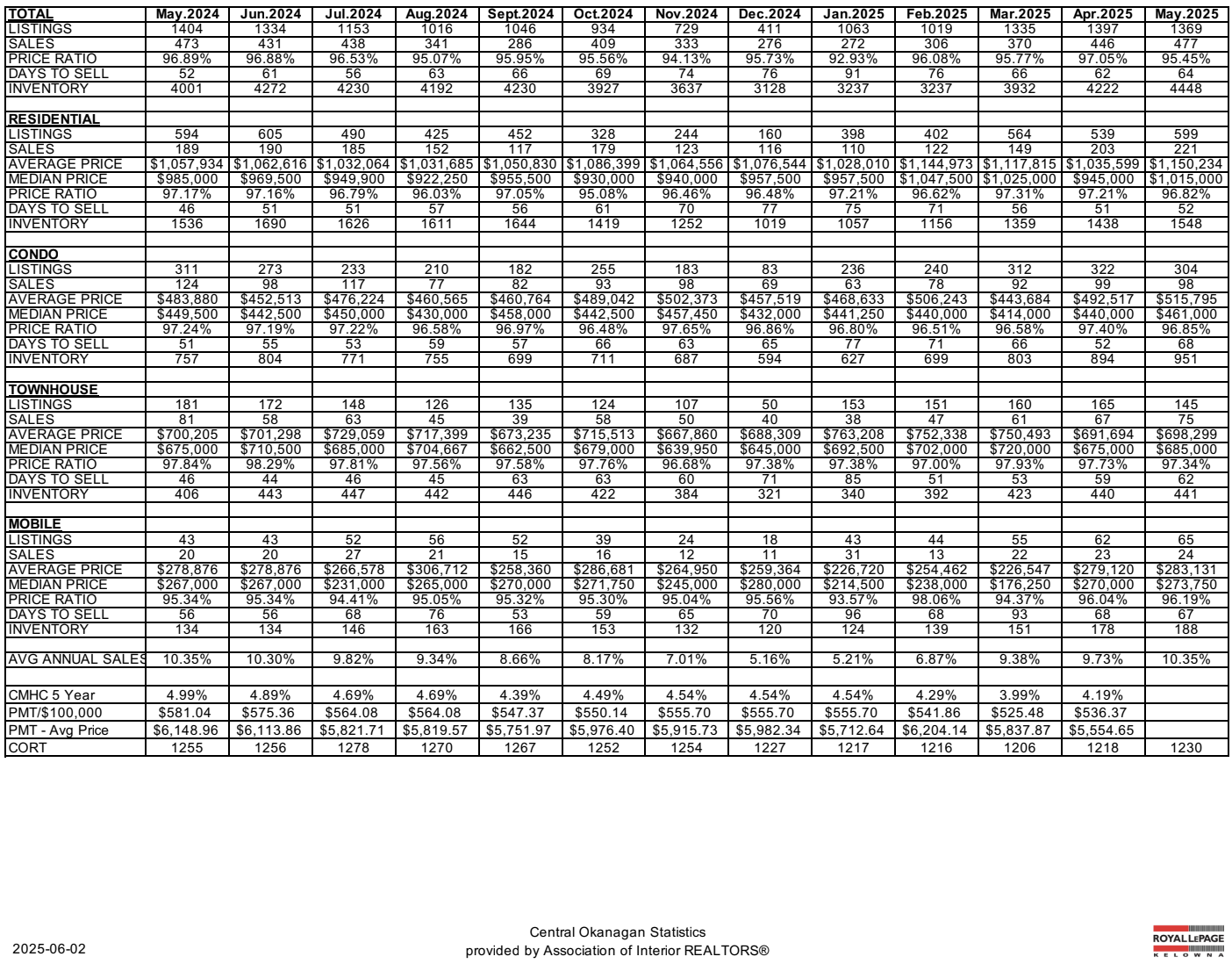
The May numbers are in for Central Okanagan real estate—and they show more strength. Sales climbed again, inventory expanded, and buyer activity remained steady. Homes are selling faster and prices continue to hold. A confident tone is returning to the market.
The Central Okanagan includes Peachland, West Kelowna, Kelowna, and Lake Country.
Overall Market Activity
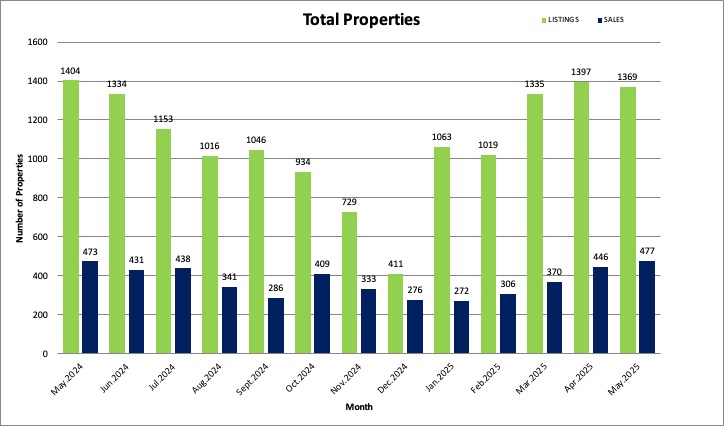
Total Sales: 477 (up from 446 in April)
Sales Volume: $361.6M (est.)
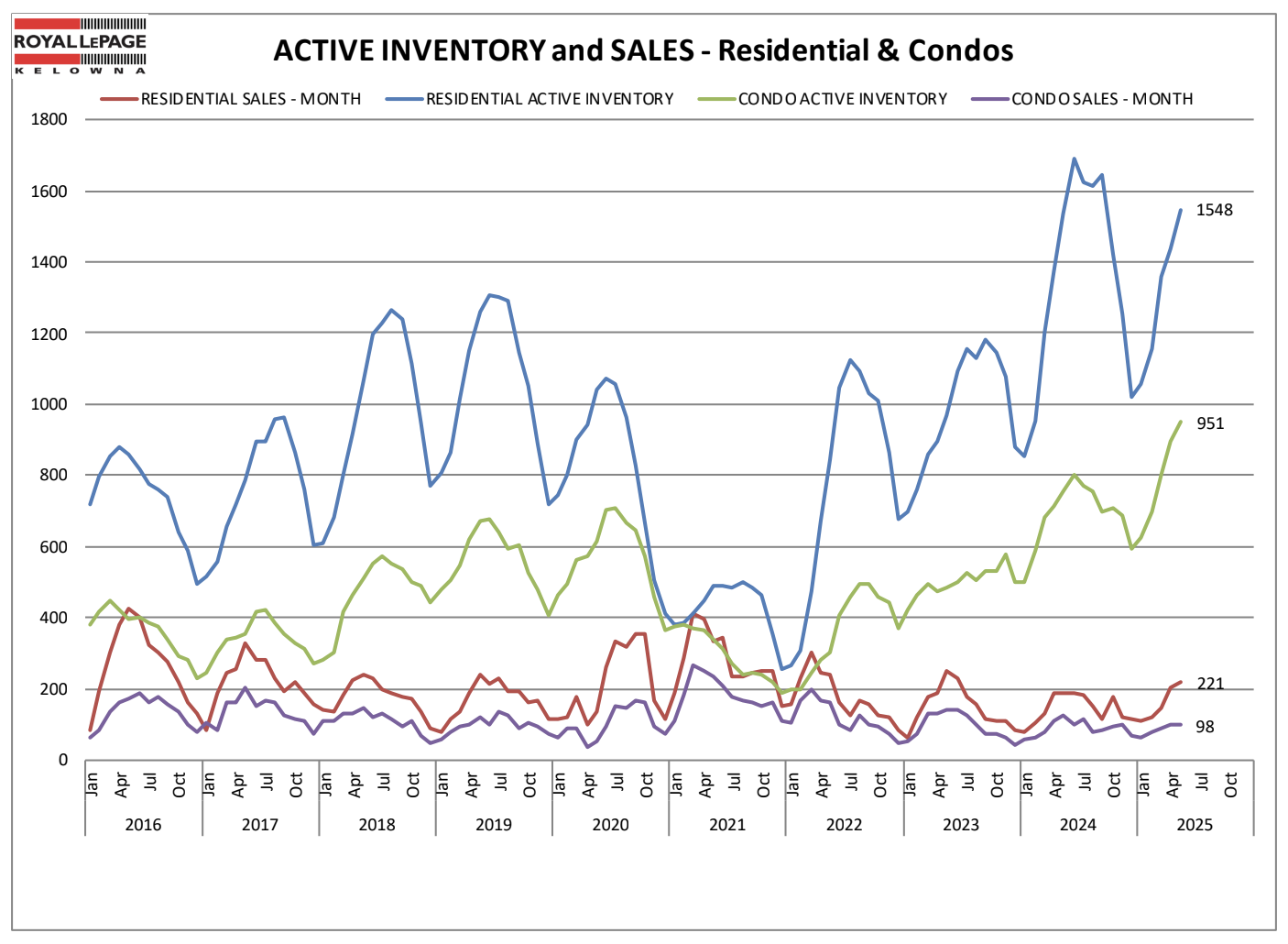
Active Listings: 4,448 (up 5.3% from April)
New Listings: 1,369 (slightly down from 1,397)
List-to-Sell Ratio: 95.45%
Days to Sell (Avg): 64
The market remains active, with higher sales and growing inventory. Homes are still selling close to asking—although list-to-sell ratios dipped slightly. Listings continue to increase, providing buyers with more selection heading into summer.
Property Type Breakdown
Single Family Homes (Excludes Lakefront & Acreage)
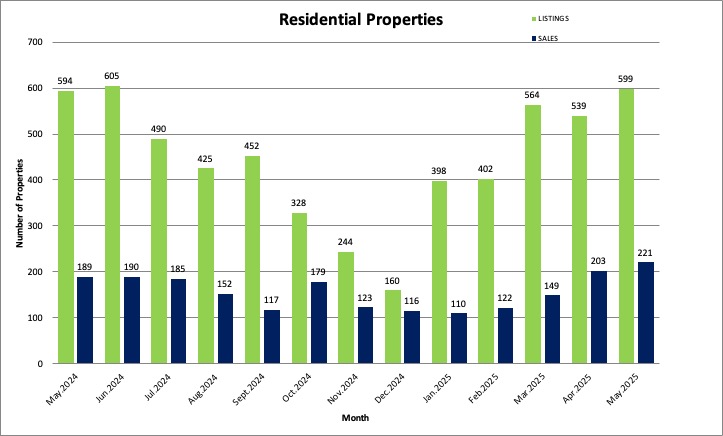
Sales: 221 (up 17% YoY)
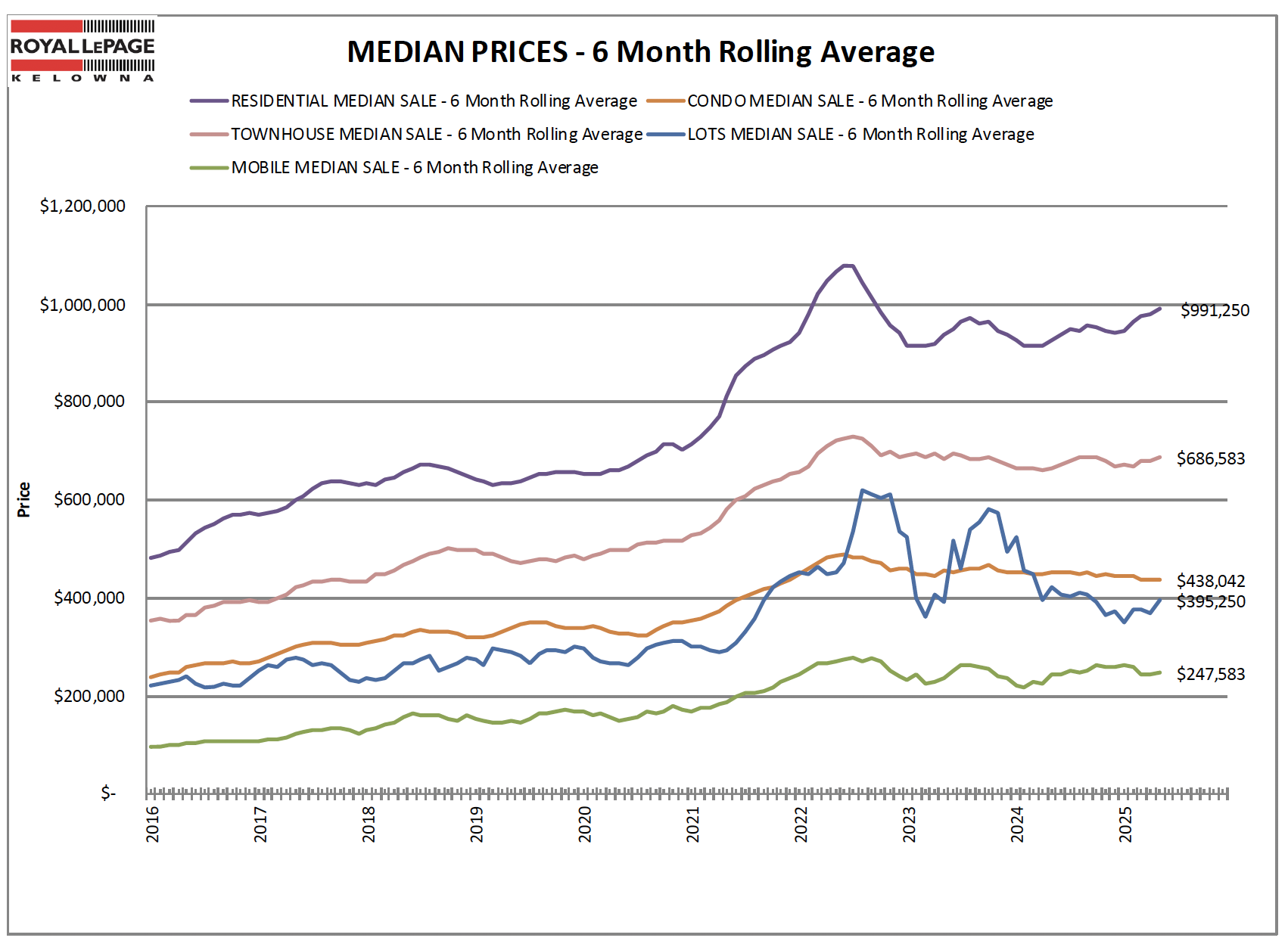
Average Price: $1,150,234 (up 8.7% YoY)
Median Price: $1,015,000 (up 3.0% YoY)
Days to Sell: 52 (up from 51 in April)
New Listings: 599 (up 0.9% YoY)
Compared to April, single-family sales rose 8.9% and the average price climbed back over $1.15M. Median price also jumped $70,000 in one month. Days on market ticked up slightly, but this segment remains strong and active.
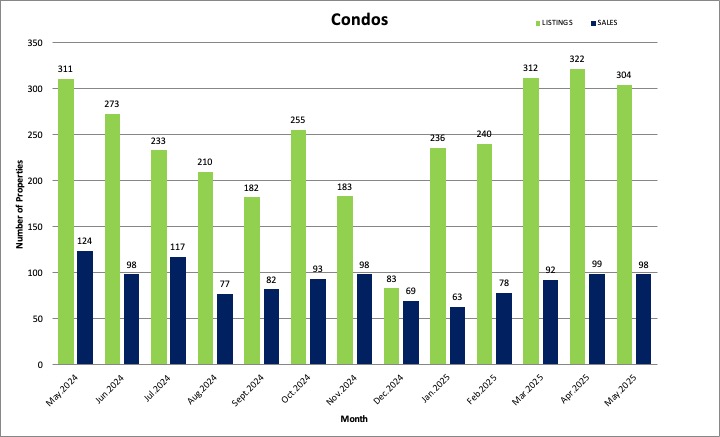
Condo/Apartments
Sales: 98 (down 21% YoY)
Average Price: $515,795 (up 6.6% YoY)
Median Price: $461,000 (up 2.5% YoY)
Days to Sell: 68 (up from 52 in April)
New Listings: 304 (down 2.3% YoY)
Condo sales remained stable month-over-month (down just 1 sale), but days on market rose by 16 days. Pricing moved upward both in average and median terms. Inventory slightly decreased from April, helping hold values steady.
Thanks for reading. If you’d like to receive more posts like this, hit the button below.
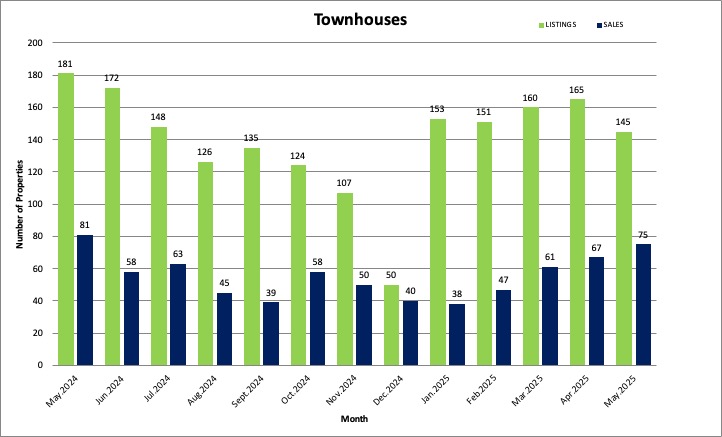
Month-over-month, townhome sales rose 11.9% while prices held firm. Median price ticked up slightly and days to sell increased by three. New listings dropped noticeably, suggesting tightening supply in this popular segment.
This report is for informational purposes only. Always consult with a licensed professional before making real estate decisions.
Market Takeaway
May 2025 delivered another month of gains for the Central Okanagan market. Sales volumes grew, prices remained solid, and listings kept pace. Buyers have more choice. Sellers who price smartly are still seeing strong interest.
Need a personalized market report? Reach out to see what’s happening in your neighbourhood.
Most realtors will tell you it’s always a good time to buy.
That’s not true. It’s never a good time to buy. There’s always risk, always fear, and always some kind of problem to consider.
1. In Slow Markets, Risk Feels Looming
When things are quiet, buyers fear they’re catching a falling knife. Prices might drop further. The headlines say “wait it out.” But that same uncertainty means sellers are more flexible—and good deals get missed by those waiting for perfect clarity.
2. In Hot Markets, Emotion Takes the Wheel
When the market’s buzzing, FOMO takes over. Buyers overpay because everyone else is buying. You fight for a home you “just have to have,” not realizing how emotion is driving the decision. It’s not rational—but it’s normal.
3. And Then There’s the Move Itself
No one likes moving. It’s costly, disruptive, and full of unknowns. Even if you're upgrading, the process is filled with friction. Change always brings a bit of pain.
So When Is the Right Time?
There isn’t one.
Markets go up, down, and sideways. Buying a home is never a clean and easy decision. But if you plan to live in it, enjoy it, and make smart long-term decisions, the best time to buy is when everyone else is scared. Like Buffett said: “Buy when others are fearful.”
And the numbers back it up: People who bought in May 2024 paid 5.2% less than those who bought in May 2025. Waiting for perfect clarity cost buyers real money.
Fear won’t disappear. So don’t wait for the perfect moment—it doesn’t exist. A good agent helps you navigate the risks, cut through the noise, and make a choice you feel great about.
This post is for informational purposes only and is not intended as financial advice. Please consult with a qualified professional before making any real estate decisions.
If you’re living in your primary residence in Kelowna, West Kelowna, Peachland, Lake Country, or Vernon — and your home’s assessed value is under the current threshold — you may qualify for the BC Home Owner Grant.
The grant reduces the amount of property tax you pay each year on your principal residence. It’s not automatic — you must apply for it every year, even if your mortgage company pays your taxes on your behalf.
Who Can Apply?
You must be a Canadian citizen or permanent resident
You must live in your home as your principal residence
Your home must be in British Columbia
The home’s assessed value must be below the grant threshold (see current limits)
There are two main types of grants:
Basic Grant (Under 65)
Up to $770 in most of BC
Additional Grant (Seniors 65+, Persons with Disabilities, Veterans)
Up to $1,045 in most of BC
How to Apply
Applications are made online through the Province of BC:
Your roll number and jurisdiction number (found on your property tax notice)
Access to a computer or mobile device
Example Using a $2,500 Tax Bill
Let’s say your annual property taxes are $2,500. Here’s how the grant affects your balance owing:
Standard homeowner (under 65): $2,500 – $770 = $1,730 owing
Senior or person with disability: $2,500 – $1,045 = $1,455 owing
Higher-assessed home (partial grant): $2,500 – $400 = $2,100 owing
Deadline
The Home Owner Grant must be claimed every year, usually by early July. Don’t miss it — even if you’re on pre-authorized payments or your lender pays your taxes for you.
Need Help or Know Someone Who Could Use It?
If you have questions about property taxes, homeownership programs, or buying or selling in the Okanagan — reach out anytime. And if you know someone who could use this info, feel free to pass it along. Referrals are always appreciated and treated with care.
This post is for informational purposes only and does not constitute legal or financial advice. Please consult the Province of British Columbia or a property tax specialist for official guidance.
Buying your first home in Kelowna or the Central Okanagan can feel out of reach — especially with today’s prices. But if you’ve been contributing to a Registered Retirement Savings Plan (RRSP), there may be a way to unlock that money tax-free to help with your down payment.
This post breaks down the Home Buyers’ Plan (HBP) — a federal program that lets you withdraw up to $60,000 from your RRSP for the purchase of a qualifying home.
How the Home Buyers’ Plan Works
You can withdraw up to $60,000 from your RRSP (or $120,000 as a couple)
You won’t pay tax on the withdrawal — as long as you repay it over 15 years
The funds must be in your RRSP for at least 90 days before withdrawal
You must be a first-time home buyer, or not have owned a home in the last 4 years
There’s no penalty, and you can use the funds for your down payment, closing costs, or other purchase-related expenses.
Who Qualifies for the HBP?
You must:
Be a Canadian resident at the time of withdrawal and up to the time the home is acquired
Be a first-time home buyer (haven't owned a home in the past four years)
Have a written agreement to buy or build a qualifying home
Intend to occupy the home as your principal residence within one year after purchase
Kelowna buyers note: resale homes, townhomes, and condos all qualify under the HBP — and so do pre-construction homes, as long as occupancy is within a year.
How Do You Pay It Back?
You repay the amount you withdrew in equal installments over 15 years. Each year, CRA will send you a statement showing how much you owe. Miss a repayment? That portion gets added to your income for that year and is taxed.
Temporary Relief: For withdrawals made between January 1, 2022, and December 31, 2025, the repayment period starts the fifth year after the withdrawal, giving you extra time before repayments begin.
Should You Use the HBP?
The Home Buyers’ Plan can be a smart way to unlock your own savings without triggering tax. Just make sure to:
Have a repayment plan in place
Factor in your long-term retirement goals
Speak to a tax professional or mortgage advisor before proceeding
This post is for informational purposes only. It is not financial or tax advice. Please consult a licensed financial or tax professional before making any decisions regarding your RRSP or the Home Buyers' Plan.





_(32).png)