This blog covers the Kelowna and Central Okanagan real estate market with straightforward information you can actually use. You'll find local market stats, buyer education, neighbourhood breakdowns, and commentary on what's happening in the Okanagan. No fluff. Written by Michael A. Jones - PREC*, a REALTOR® with Royal LePage Kelowna.

May 23, 2025

How Some Kelowna Homeowners Are Making Their Mortgage Tax-Deductible

Michael A. Jones – PREC* | Royal LePage Kelowna

The Smith Manoeuvre explained for Canadian homeowners

Mortgage interest isn’t tax-deductible in Canada — unless you use a financial strategy called The Smith Manoeuvre™. Originally developed by Fraser Smith, this approach has helped some Canadian homeowners gradually convert their mortgage debt into tax-deductible investment loans.

If you're a homeowner in Kelowna or anywhere in the Okanagan, and you're curious about how to make your mortgage work harder for you, this is something worth knowing — with caution.

What Is the Smith Manoeuvre?

According to Investopedia, the Smith Manoeuvre involves borrowing back the principal you pay down on your mortgage and investing it. Over time, this converts your non-deductible mortgage interest into deductible investment loan interest.

How It Works — The Role of a Readvanceable Mortgage

The Smith Manoeuvre depends on a specific type of loan setup called a readvanceable mortgage. This is a product that combines a traditional mortgage with a home equity line of credit (HELOC). As you pay down the mortgage principal, your HELOC limit increases by the same amount.

Here’s a simplified step-by-step breakdown:

  1. Start with a Readvanceable Mortgage: Each mortgage payment you make reduces your principal — which automatically increases the amount available to borrow through your HELOC.
  2. Re-Borrow from the HELOC to Invest: After every payment, you borrow back the paid-down principal (via the HELOC) and invest it in income-generating assets like dividend stocks, REITs, or funds.
  3. Claim Tax Deductions: Because the borrowed money is used for investments that generate income, the interest on the HELOC becomes tax-deductible under CRA rules.
  4. Use Tax Refunds to Pay Down the Mortgage Faster: You can apply your tax refund to accelerate mortgage payments — which increases your HELOC room — and repeat the cycle.

This process gradually converts your mortgage into an investment loan with tax-deductible interest, while also building a portfolio of income-generating assets. However, it requires discipline, proper financial planning, and the ability to manage leverage over time.

To learn more about how readvanceable mortgages work in Canada, check out this overview from WOWA.ca.

Who Is This For?

  • Homeowners with strong budgeting habits
  • Buyers who plan to hold long term
  • People comfortable with borrowing to invest
  • Anyone working closely with a mortgage broker and financial advisor

What Are the Risks?

  • Your investments may lose value
  • HELOC interest rates can increase
  • The CRA can reject deductions if used incorrectly
  • You could end up deeper in debt without a clear plan

Where Can I Learn More?

Related Reading

Still curious if this is something that could work for you? Reach out — I’ll help you get clarity and connect with the right professionals to review the numbers before you make any decisions.

This article is for informational purposes only. The Smith Manoeuvre involves financial risk. Always consult a licensed mortgage broker, accountant, or financial advisor before pursuing tax or investment strategies. I do not provide tax or investment advice.


May 23, 2025

Navigating Kelowna’s 2025 Market: Tips From a Trusted REALTOR®

Michael A. Jones – PREC* | Royal LePage Kelowna

Model house held with backdrop of Central Okanagan real estate landscape

The 2025 Kelowna real estate market is a mix of new opportunities and lingering challenges. Whether you’re buying, selling, or just watching from the sidelines, understanding what’s happening locally can help you make a smarter move.

What’s Happening in Kelowna’s Market Right Now?

Inventory has increased compared to last year, but the number of serious buyers remains steady. Homes that are priced correctly are moving, while overpricing leads to longer days on market and eventual price reductions.

Detached homes in the Glenmore, Lower Mission, and Black Mountain areas are still in demand—especially those with updated kitchens, suites, or flexible layouts. Meanwhile, the condo market has cooled slightly, with buyers becoming more selective as fees and strata conditions play a bigger role in decision-making.

For Buyers: Be Ready, But Patient

If you're buying in 2025, this is not the market to rush. But it’s also not the market to hesitate once you find the right fit. Here’s what helps:

  • Get pre-approved before viewing
  • Focus on neighborhood value, not just price per square foot
  • Be cautious with fixer-uppers—renovation costs are still high

Working with a REALTOR® who knows the area helps you identify good buys early—and avoid the ones with costly surprises hidden in the strata minutes.

For Sellers: Preparation Is Everything

Kelowna buyers in 2025 are informed and comparison-shopping. That means presentation and strategy matter more than ever. Sellers should:

  • Invest in decluttering and staging, even for smaller homes
  • Price based on comparable sales—not sentiment
  • Respond quickly to showing requests and offer feedback

A good listing strategy combines strong pricing with local targeting—especially if you're trying to stand out in high-competition areas like Rutland South or The Ponds.

Kelowna in 2025: Still a Strong Long-Term Play

While short-term ups and downs are expected, Kelowna remains one of the strongest mid-sized markets in Canada. Strong migration, lifestyle appeal, and ongoing infrastructure investment support long-term demand.

Related Reading

Thinking of buying or selling in Kelowna? Let’s connect and talk about what today’s market means for your next step.

This post is for informational purposes only. You should always consult with a licensed real estate professional before proceeding with any real estate transaction.

May 20, 2025

10 Types of Mortgages in British Columbia Every Buyer Should Know

Michael A. Jones – PREC* | Royal LePage Kelowna

Types of mortgages in BC explained visually

In British Columbia, home buyers have access to a variety of mortgage types depending on their financial profile, down payment, and property goals. Whether you’re a first-time buyer or moving up, understanding your options can help you make a smart, informed decision.

1. Insured Mortgage

  • Requires: Less than 20% down payment
  • Max Purchase Price: $1 million
  • Premium: Mortgage insurance is added to your loan
  • Benefit: Lower interest rates (typically)
  • Limitation: Stricter qualification rules (stress test)

These are backed by providers like CMHC, Sagen, or Canada Guaranty.

2. Uninsured (Conventional) Mortgage

  • Requires: 20% or more down payment
  • Used For: Homes over $1M or buyers with large down payments
  • Benefit: No insurance premiums, more flexibility

3. Fixed-Rate Mortgage

  • Rate: Stays the same for the full term
  • Benefit: Predictable payments
  • Drawback: Higher penalties if broken early

4. Variable-Rate Mortgage

  • Rate: Floats with lender’s prime rate
  • Benefit: Lower initial interest rate
  • Risk: Payment may increase if rates rise

5. Adjustable-Rate Mortgage

  • Similar to a variable-rate mortgage
  • Key Difference: Payment amount changes immediately with prime
  • Good For: Buyers who want to pay down more if rates fall

6. Open Mortgage

  • Can be paid off: Anytime without penalty
  • Interest Rate: Higher
  • Best For: Buyers planning to sell or refinance soon

7. Closed Mortgage

  • Lower interest rate than open mortgage
  • Penalty: For early payout
  • Most common for long-term buyers

8. HELOC (Home Equity Line of Credit)

  • Access: Credit based on home equity
  • Often paired with: Mortgage at time of purchase
  • Best For: Renovations, cash flow, or flexibility

9. Cashback Mortgage

  • Gives cash back at closing (usually 1–5%)
  • Used For: Covering legal, closing, or moving costs
  • Downside: Higher interest rate

10. Purchase Plus Improvements Mortgage

  • Allows you to finance renovations as part of your mortgage
  • Best For: Fixer-uppers or dated homes

Want to Compare Today’s Rates?

Use this trusted Canadian tool to view up-to-date mortgage rates across lenders: Compare Mortgage Rates on WOWA →

Related Reading

Not sure which mortgage type fits your needs? Let’s connect. I’ll help you navigate the options, connect with local brokers, and make sure you know what to expect before you commit.

This post is for informational purposes only and does not constitute financial or mortgage advice. Always consult a licensed mortgage broker or lender before making any mortgage decision.

Posted in Finance, Mortgages
May 20, 2025

Insured vs Uninsured Mortgages in Kelowna BC: What Buyers Should Know

Michael A. Jones – PREC* | Royal LePage Kelowna

Kelowna mortgage options: insured vs uninsured

If you're buying a home in Kelowna — or anywhere in British Columbia — one of the first mortgage decisions you'll face is whether your mortgage will be insured or uninsured. Even buyers with more than 20% down should understand the difference.

What Is an Insured Mortgage?

In Canada, if your down payment is under 20%, your mortgage must be insured. This protects the lender in case of default and allows you to buy with as little as 5% down. These mortgages are backed by one of three insurers — most commonly the Canada Mortgage and Housing Corporation (CMHC).

Pros:

  • Lower interest rates (typically)
  • Accessible with as little as 5% down
  • Helps first-time buyers enter the market

Cons:

  • Mortgage insurance premiums add to your loan cost
  • Higher total cost over the life of the mortgage

What Is an Uninsured Mortgage?

Uninsured mortgages are used when you put down 20% or more. There’s no need for mortgage insurance, and you gain more flexibility in how the mortgage is structured.

Pros:

  • No insurance premiums
  • More flexible options (amortization, refinancing, lenders)

Cons:

  • May come with slightly higher interest rates
  • Requires more upfront cash

Even With a Large Down Payment, Consider Both

Some buyers choose an insured mortgage even when they could go uninsured. Why? Because it can sometimes offer a lower rate — and allow them to keep more cash available for:

  • Home improvements
  • Emergency savings
  • Other investments
  • Furnishings and moving expenses

Questions to Ask Yourself

  • Do I want to keep more cash liquid after closing?
  • Will I live in this property or rent it out?
  • Do I qualify for both types — and what are the interest rates?
  • Will the insurance premium be offset by a lower rate?
  • Is long-term flexibility more important to me than short-term savings?

👉 Check today’s mortgage rates here: View Kelowna Mortgage Rates on WOWA

Related Reading

Still unsure which mortgage type makes more sense for you? Reach out — I can help you connect with a mortgage expert and walk through the real numbers side-by-side.

This post is for informational purposes only and does not constitute financial or mortgage advice. Always consult a licensed mortgage broker or lender before making any decisions.

May 18, 2025

BC Home Buying Process: From Offer to Completion Explained

Michael A. Jones – PREC* | Royal LePage Kelowna

Step-by-step BC home buying process

Whether you're buying a home for the first time or it's just been a while, one of the most common questions is:

"What happens once I find a home I like?"

This guide walks you through the full process of buying a home in British Columbia — from offer to keys — and is especially useful if you're searching in Kelowna, West Kelowna, or anywhere in the Central Okanagan.

1. We Write an Offer

Once you’ve found a property you want to move forward with, we write an offer. It includes your price, desired dates, and a set of conditions (called “subjects”). Common subjects include:

  • Financing approval
  • Home inspection
  • Review of strata documents (if applicable)
  • Review of title and property disclosure

I prepare and submit the offer on your behalf and negotiate terms with the seller's agent.

2. The Seller Responds

The seller can accept your offer, reject it, or counter it. If they counter, we negotiate terms until both parties agree. Once signed by both sides, the deal is officially “under contract.”

3. Subject Removal Period

This is your due diligence window — usually 7 to 10 days. During this time, you complete all the steps needed to feel confident about the home:

  • Submit documents to your lender or mortgage broker
  • Book and complete a home inspection
  • Review all documents and disclosures
  • Ask questions, confirm insurance, and clarify legal points

I'll help guide this entire process and coordinate with all professionals involved.

4. Remove Subjects & Pay the Deposit

If everything checks out, we remove subjects in writing. This locks in the deal. You’ll also pay the deposit at this point — usually around 5% — held in trust until closing.

5. The Legal Side: Your Lawyer or Notary

A real estate lawyer or notary will prepare the final documents, confirm with your lender, and ensure the legal transfer of title happens correctly. They’ll walk you through everything before closing day.

6. Completion & Possession

On completion day, funds are transferred. On possession day (often the next business day), you get the keys. I meet you at the home, we do a quick walk-through, and the place is yours.

7. Ongoing Support

The process doesn’t stop after the sale. I’ll be here to help with any questions, market updates, or future real estate plans long after you move in.

Related Resources

Still have questions? Just reach out. If you're actively looking or preparing to buy, I’m here to make sure you understand every step before you take it.

This post is for general informational purposes only. For advice specific to your financing or legal situation, always consult your lender or legal professional directly.

May 14, 2025

Property Tax Notices Are Coming — Here’s How to Estimate Yours in the Okanagan

Michael A. Jones – PREC* | Royal LePage Kelowna

BC property tax concept image

Property tax notices in British Columbia typically land in mailboxes in late May — and that means now is the perfect time to estimate what you might owe. Whether you live in Kelowna, Vernon, West Kelowna, Peachland, or Lake Country, here’s a quick way to calculate your 2025 property taxes in advance.

Step 1: Look Up Your BC Assessment Value

Start with the assessed value of your home. This is updated each January by BC Assessment and forms the basis for calculating your taxes.

Step 2: Use the Online Estimator for Your Municipality

Each local government provides a tax calculator where you can paste in your assessed value. These tools reflect the most recent tax rates for each area:

These calculators don’t replace your actual tax notice — but they’re accurate enough to help you plan, especially if you're budgeting, buying, or selling.

Why Do This Now?

Getting a handle on your property taxes before the official notice arrives lets you prepare for the year ahead. If you’ve just bought or are considering selling, it's also a smart number to include in your analysis.

If you’d like help understanding what your property tax means for your specific situation, feel free to reach out. I’m always happy to walk you through the tools.

This post is for informational purposes only and does not represent official property tax advice. For accurate and current information, always refer to the official websites of your local municipality. I am not a city official and do not represent the City of Kelowna, West Kelowna, Vernon, Peachland, or Lake Country.

Posted in Home Owners, taxes
May 13, 2025

What Every Buyer Needs to Know About Strata Living in BC

Michael A. Jones – PREC* | Royal LePage Kelowna

Strata ownership concept diagramBuying into a strata in British Columbia isn’t just buying a unit — it’s joining a community with shared responsibilities and long-term commitments. Whether you're considering a condo in Kelowna, a townhome in Lake Country, or a bare land strata in Peachland, understanding the basics of strata living is key.
What Is a Strata?

A strata is a form of ownership that includes your individual unit and a share of the common property. That might be hallways, elevators, gyms, gardens, or even parking garages. You’re not just buying your space — you're also buying into the upkeep of the entire complex.

Rules, Bylaws, and Your Lifestyle

Every strata has bylaws and rules — some strict, others flexible. These might include:

  • Whether you can rent your unit short-term or long-term
  • What types of pets you can have (and how many)
  • Quiet hours and smoking rules
  • Approval requirements for renovations

Before buying, review these closely. They affect your day-to-day life more than most people expect.

Fees and Financial Health

Strata fees cover building maintenance, insurance for common areas, utilities, and future repairs. In a well-run building, these fees usually increase slightly every year. Major repairs — like roof replacements — are often funded through special levies, so it’s crucial to check the strata’s Contingency Reserve Fund (CRF) and depreciation report.

Insurance: What’s Covered?

Strata corporations carry insurance on the building and common property. You’ll still need personal condo or townhouse insurance for your belongings, interior upgrades, and liability. Always check both policies to know what’s covered — and what isn’t.

Read the Documents

Before you buy, review the Form B, strata bylaws, financial statements, and minutes from meetings. These documents tell you the story of the building — what’s working, what’s not, and what’s coming up next.

Strata Councils and Your Role

The strata council is made up of elected owners who make decisions on behalf of everyone. They handle finances, maintenance, bylaw enforcement, and long-term planning. While joining the council is optional, staying informed about what they’re doing is not. Read minutes. Ask questions. You’re part of the collective now.

Want to Go Deeper?

This post just scratches the surface. For a more detailed breakdown of everything you need to know, download the full guide:

→ Download the Strata Property Buying Guide (Free PDF)

Have questions or want help reviewing strata docs before you buy? Reach out any time.

This post is for general informational purposes only and does not constitute legal, financial, or building advice. Readers should consult with a licensed REALTOR®, certified home inspector, insurance provider, or legal professional before making any real estate decisions. Information is believed to be accurate at the time of writing but is subject to change.

May 12, 2025

Should You Buy a Home with Poly-B Plumbing? The Local Perspective

Michael A. Jones – PREC* | Royal LePage Kelowna

Polybutylene piping — known as Poly-B — was used in thousands of Canadian homes from the late 1970s to the mid-1990s. In Kelowna, West Kelowna, and Lake Country, homes built in this era often still contain Poly-B. So, what should buyers know before writing an offer on a home with this kind of plumbing?

What Is Poly-B Plumbing?

Poly-B is a flexible grey plastic pipe once seen as an affordable, easy-to-install alternative to copper. But over time, it became clear that Poly-B is prone to failure, especially when exposed to high water temperatures or municipal chlorine. That risk makes it a red flag for buyers — and a concern for insurers.

Insurance and Financing Challenges

Some insurance providers may charge higher premiums or refuse coverage unless the Poly-B is replaced. A few may even require a full plumbing upgrade before issuing a policy — especially if there’s been a past leak or claim.

It’s important to work with a REALTOR® who knows what questions to ask — including when to get plumbing quotes during due diligence or inspection windows.

How Much Does It Cost to Replace Poly-B?

In the Central Okanagan, replacing Poly-B with PEX or copper typically costs between $6,000 and $15,000 depending on the home’s size, layout, and accessibility. The cost may include drywall repairs, painting, and permits. Some buyers successfully negotiate a price reduction to cover all or part of the work.

For strategies that make homeownership more attainable, especially when faced with upgrade costs, read these affordability tips for Kelowna buyers.


This post is for general informational purposes only and does not constitute legal, financial, or building advice. Readers should consult with a licensed REALTOR®, certified home inspector, insurance provider, or legal professional before making any real estate decisions. Information is believed to be accurate at the time of writing but is subject to change.

How It Affects Resale Value

Buyers today are more informed than ever — and so are their inspectors. If Poly-B is discovered late in a transaction, it can cause deals to fall apart or force sellers into last-minute discounts. Even if the pipe hasn’t failed yet, it affects perceived value.

To understand how this fits into broader pricing trends, see: List-Price-to-Sale-Price Ratio: A Vital Indicator in Real Estate Transactions.

Is It a Dealbreaker?

Not necessarily. If the price is right and the home is otherwise solid, some buyers treat Poly-B as a project to budget for. But it’s something to factor in — not ignore.

Bottom Line

Poly-B plumbing doesn’t have to be a reason to walk away, but it should always be a reason to slow down and ask the right questions. A knowledgeable local agent can help you weigh the risks and take the right next step.

More Info

More Details on Poly-B & It's Risks

More Details About Poly-B Insurance

Poly-B In Condos

The Complete Poly-B Guide

May 12, 2025

Looking for a Great REALTOR® in the Okanagan? Here’s What to Watch For

Michael A. Jones – PREC* | Royal LePage Kelowna

Whether you're buying a lakeview home in Kelowna, selling your acreage in Vernon, or investing in Peachland, choosing the right agent matters. The Okanagan is a diverse and competitive real estate market—and working with someone who truly knows it can make all the difference.

This is for informational purposes only. You should always consult with a licensed real estate professional before proceeding with any real estate transaction.

What Makes a REALTOR® the Right Fit?

In the Okanagan, there are many agents to choose from. But not all REALTORS® are equally prepared to help you succeed. The right real estate professional will:

  • Understand both big-picture trends and hyper-local details
  • Offer honest, no-pressure advice tailored to your goals
  • Know the differences between communities like Lower Mission, East Hill, and Glenrosa
  • Prioritize long-term value over quick wins

Local Knowledge Isn’t Optional—It’s Essential

The Okanagan isn’t a single market—it’s a collection of communities, each with their own character, pricing dynamics, and lifestyle tradeoffs. The right REALTOR® will help you navigate:

  • School catchments and neighborhood vibes in Vernon and Kelowna
  • Upcoming infrastructure changes in West Kelowna
  • Development plans and zoning in Lake Country and Peachland

Without strong local knowledge, you risk missing opportunities—or overpaying for the wrong property.

For Buyers: What to Look For

If you're buying, especially if you're new to the region, you want someone who will:

  • Help you understand market trends and price trajectories
  • Catch issues early—like strata red flags or outdated septic systems
  • Advocate for your goals during the negotiation process

For Sellers: Who Will Actually Deliver?

Not all listing agents are created equal. A skilled seller’s agent will:

  • Give you an honest valuation—based on facts, not flattery
  • Market beyond MLS, using smart targeting and high-quality visuals
  • Negotiate hard to protect your equity

Final Thoughts

Finding a great REALTOR® in the Okanagan isn’t about flashy ads—it’s about trust, fit, and performance. Whether you’re looking in Kelowna, Vernon, West Kelowna, Peachland, or Lake Country, the right agent can help you make smart, confident decisions in a shifting market.

Need help finding or selling a home in the Okanagan? Reach out here to start a conversation and get answers that actually help.

May 12, 2025

Vernon Real Estate Market Update – April 2025

Michael A. Jones – PREC* | Royal LePage Kelowna

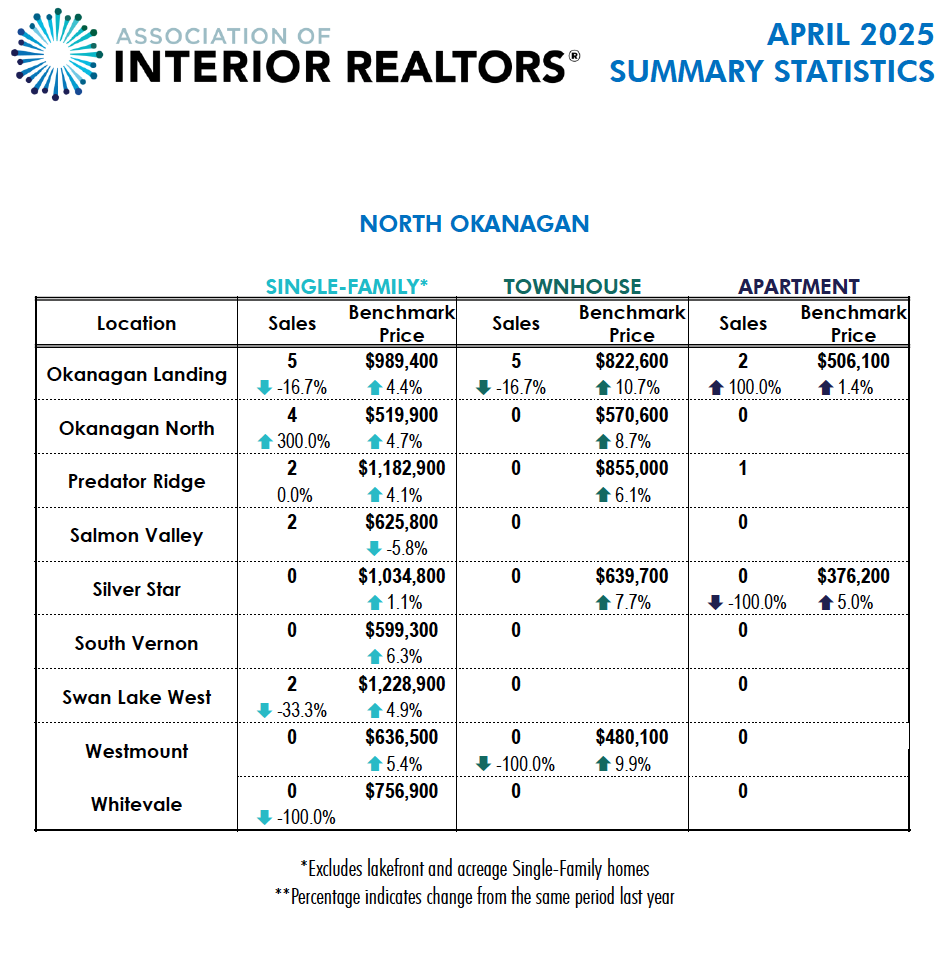
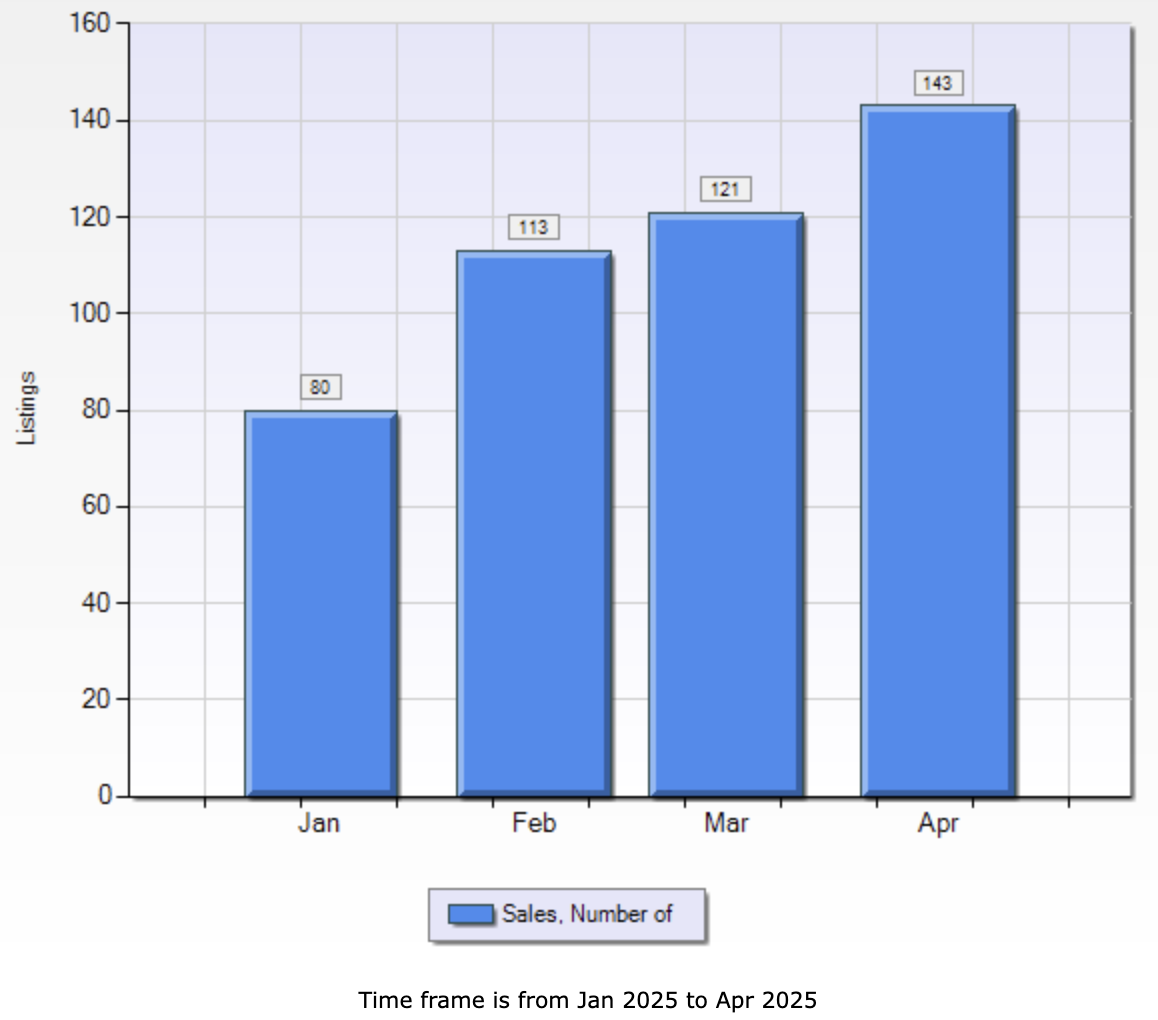
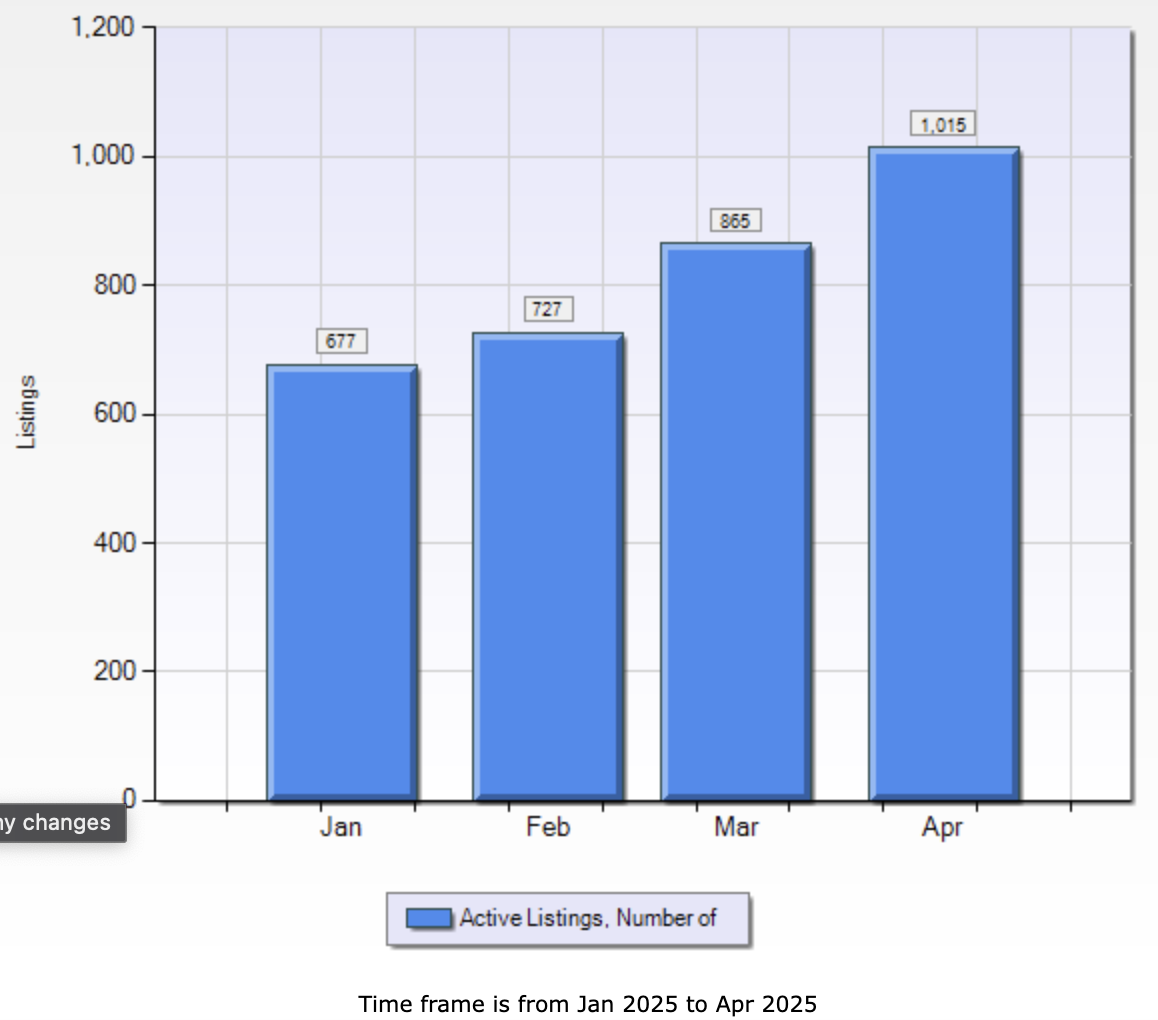
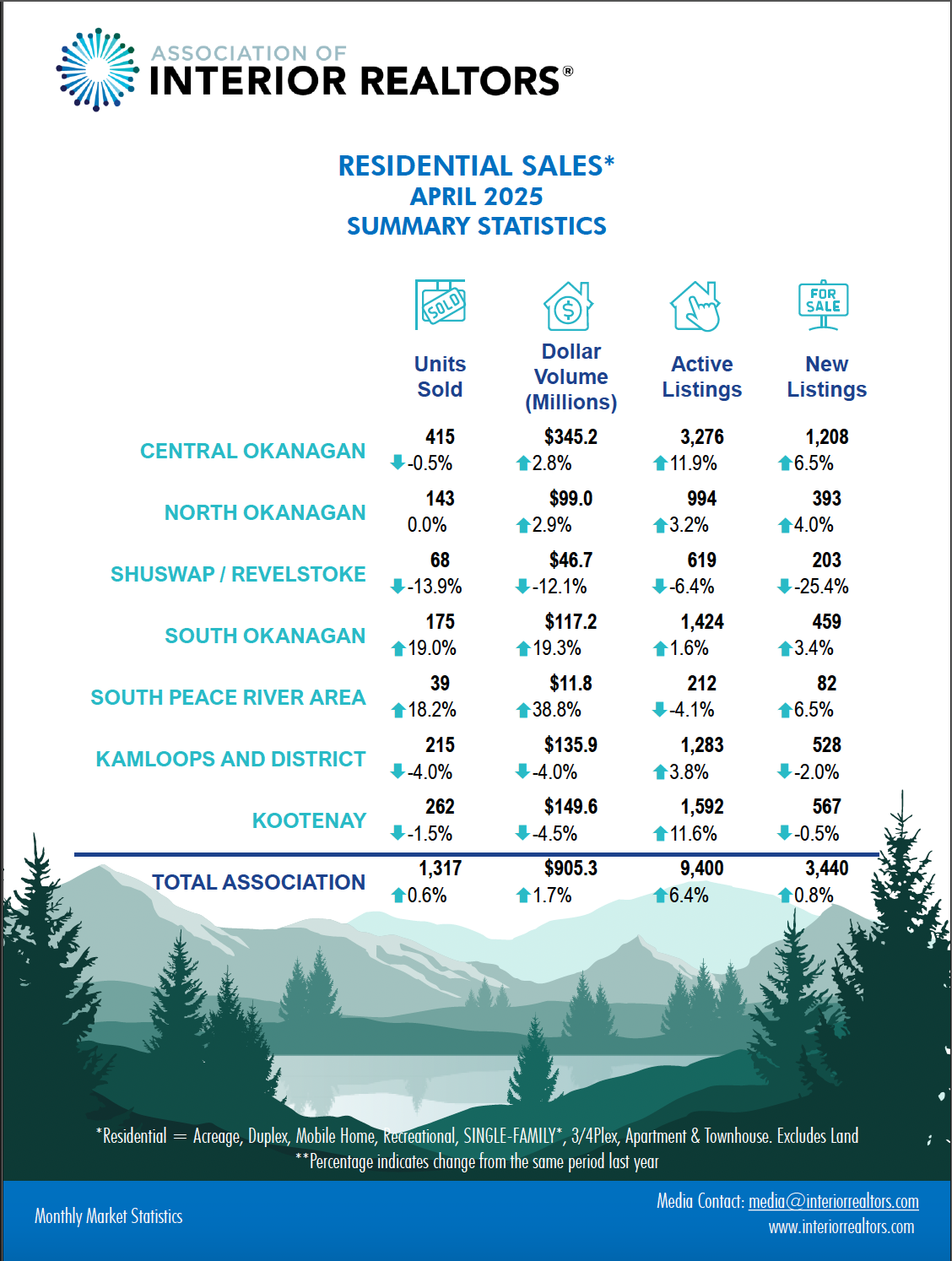
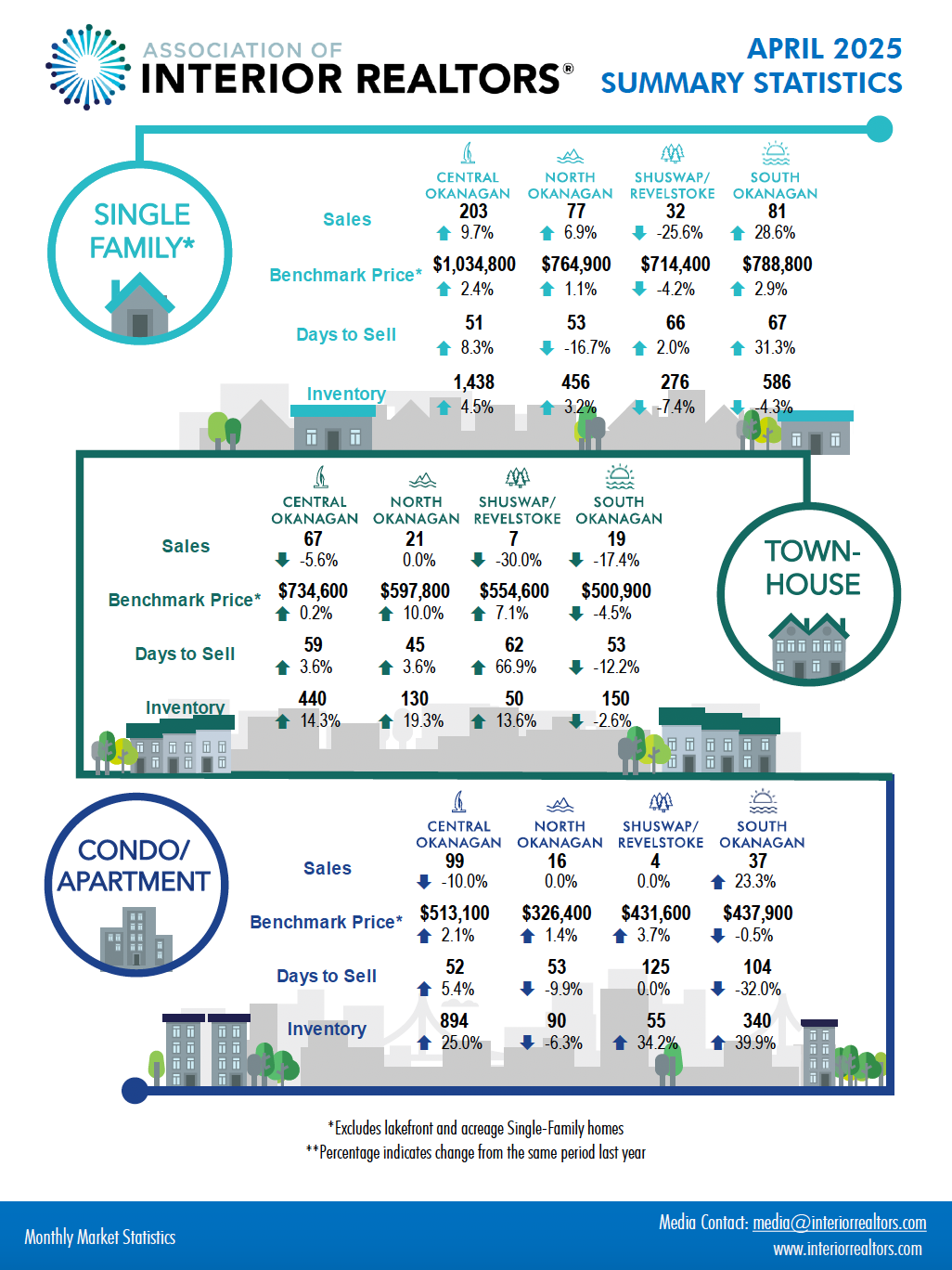
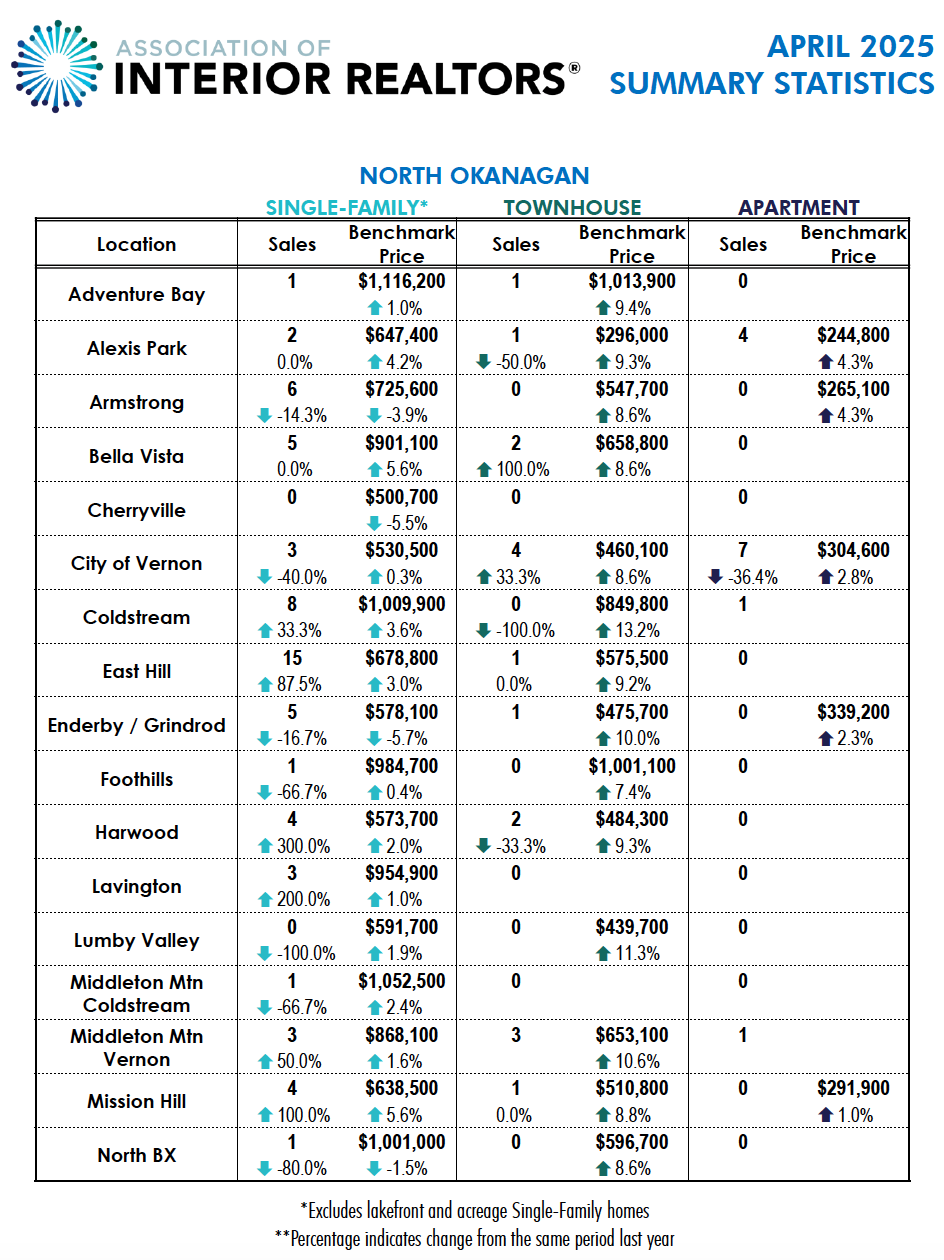
The April market stats are in for the North Okanagan, and they show a region adjusting to shifting demand. Total sales held steady year-over-year, while inventory continued to grow. Buyers remain active, but patient. Sellers who price well are seeing results—especially in key product segments.

The North Okanagan includes Vernon and surrounding communities such as Coldstream, Armstrong, Enderby, and Lumby.

Overall Market Activity

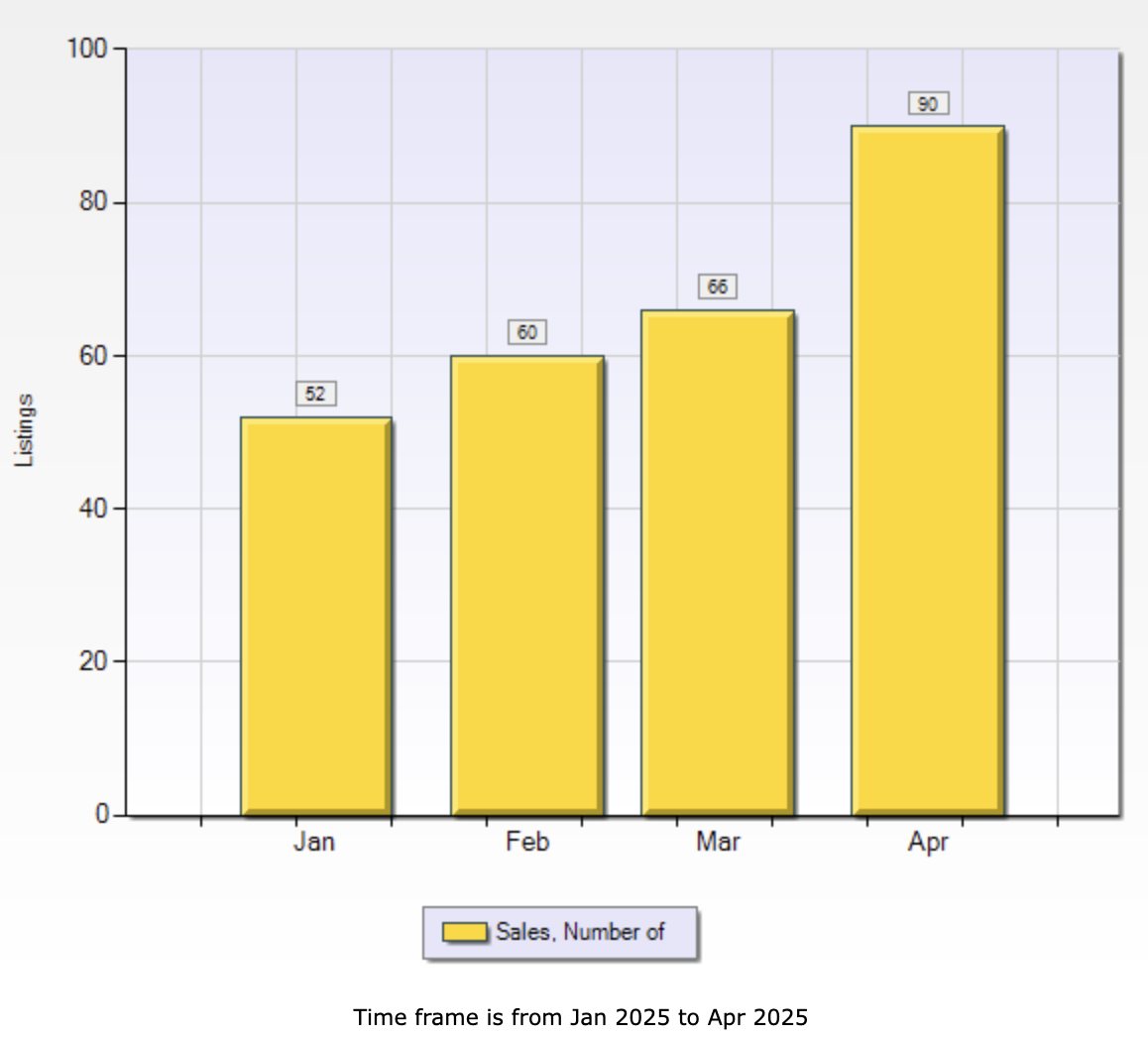
  • Total Sales: 164 (up 0.61%)
  • Sales Volume: $106.6M (down 6.34%)
  • Active Listings: 1,488 (up 5.23%)
  • New Listings: 489 (down 0.20%)
  • List-to-Sell Ratio: 95.14% (up from 89.52%)
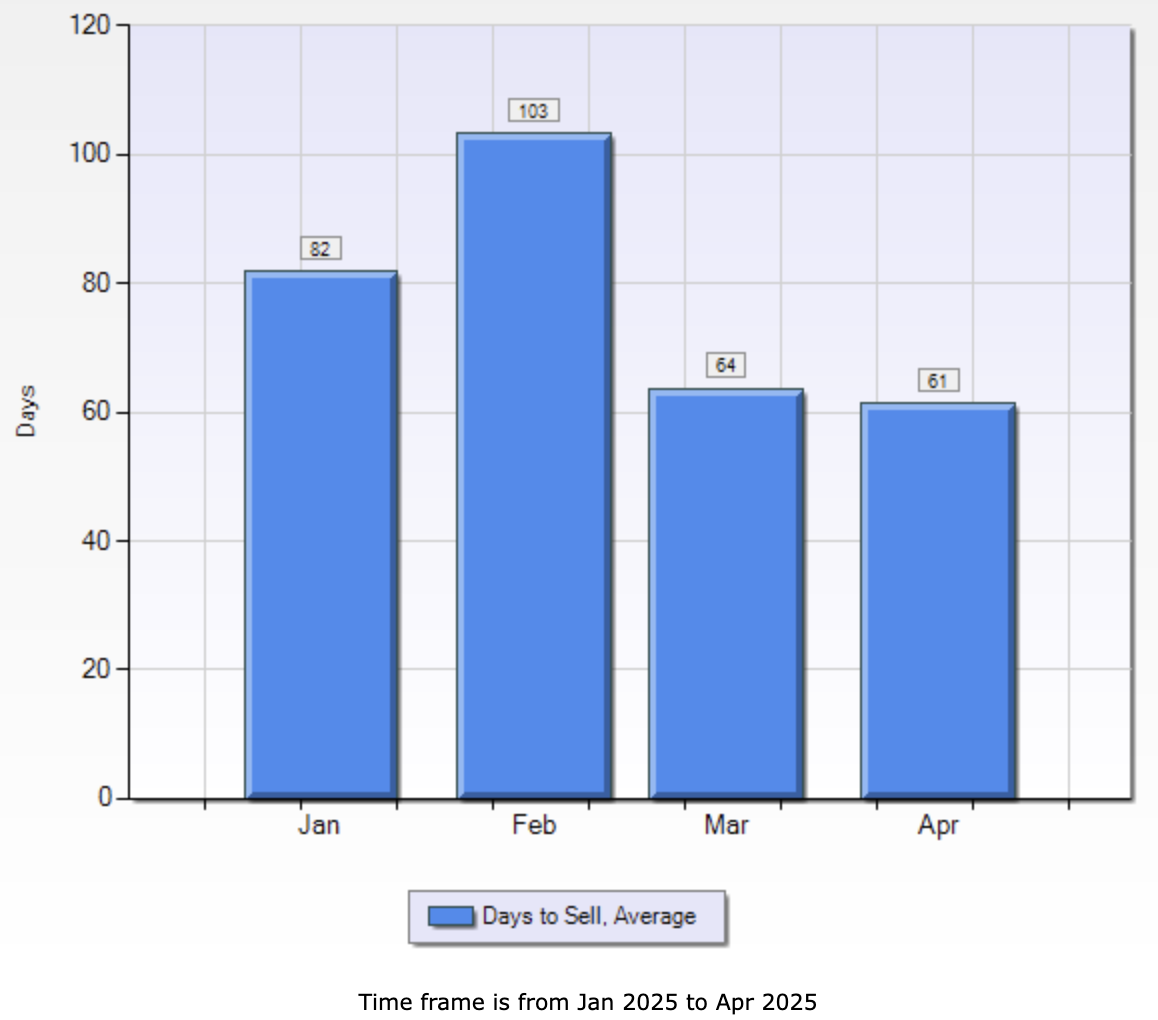
  • Days to Sell (Avg): 75 (down 8.54%)

Compared to last April, the North Okanagan market shows resilience despite a drop in dollar volume. Sales counts are holding, homes are moving faster, and pricing strategy is clearly being rewarded. Inventory remains higher than last year, giving buyers more options—but well-prepared homes are still moving swiftly.

This is for informational purposes only. You should always consult with a licensed real estate professional before proceeding with any real estate transaction.

Property Type Breakdown

Single Family Homes (Excludes Lakefront & Acreage)

  • Sales: 77
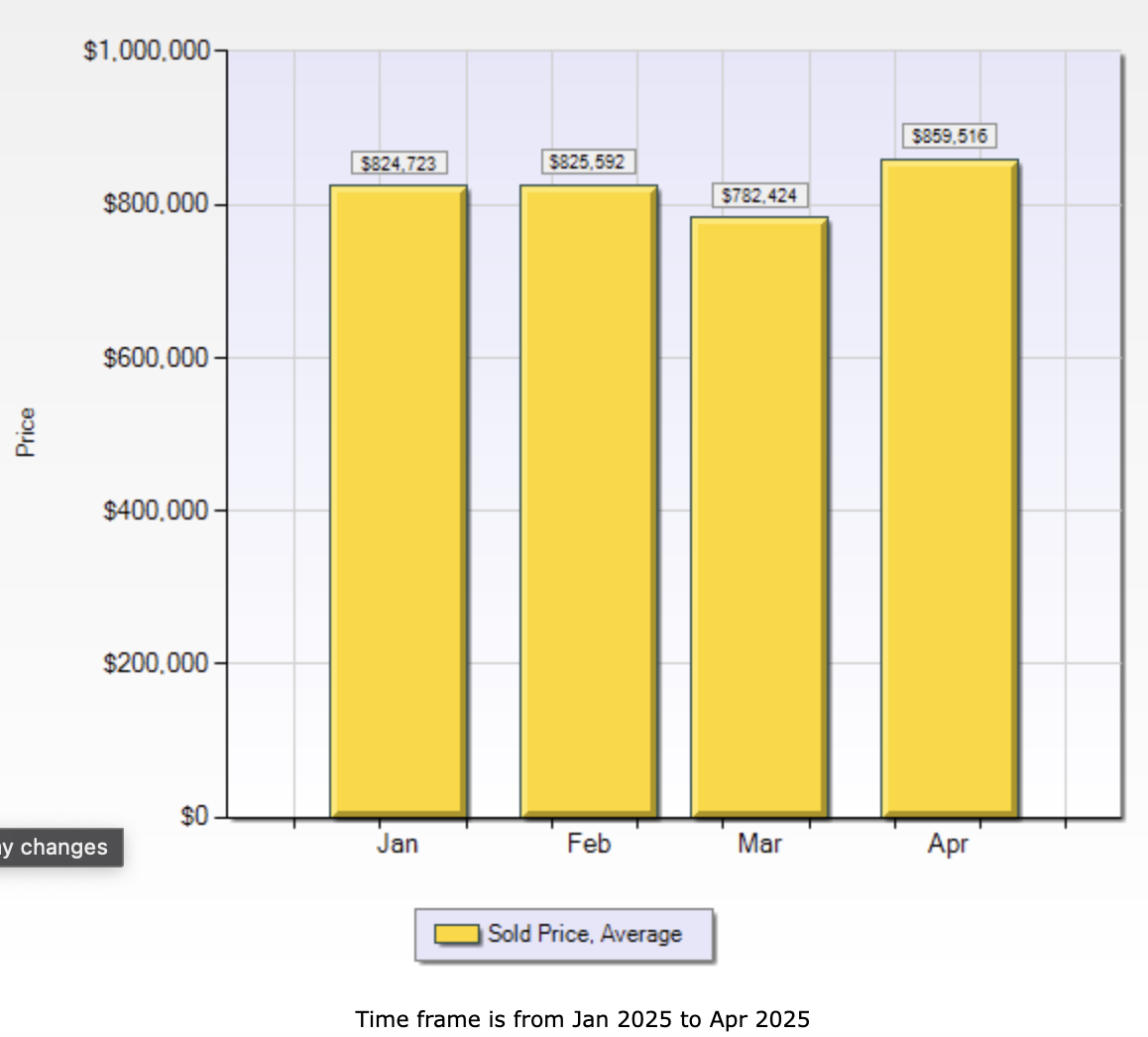
  • Average Price: $779,158
  • Median Price: $707,500
  • Days to Sell: 53
  • New Listings: 193

Sales were solid, and prices are holding steady. With over 190 new listings in April alone, buyers in this segment have options—but attractive, well-priced homes are still drawing quick offers.

Condo/Apartments

  • Sales: 16
  • Average Price: $296,869
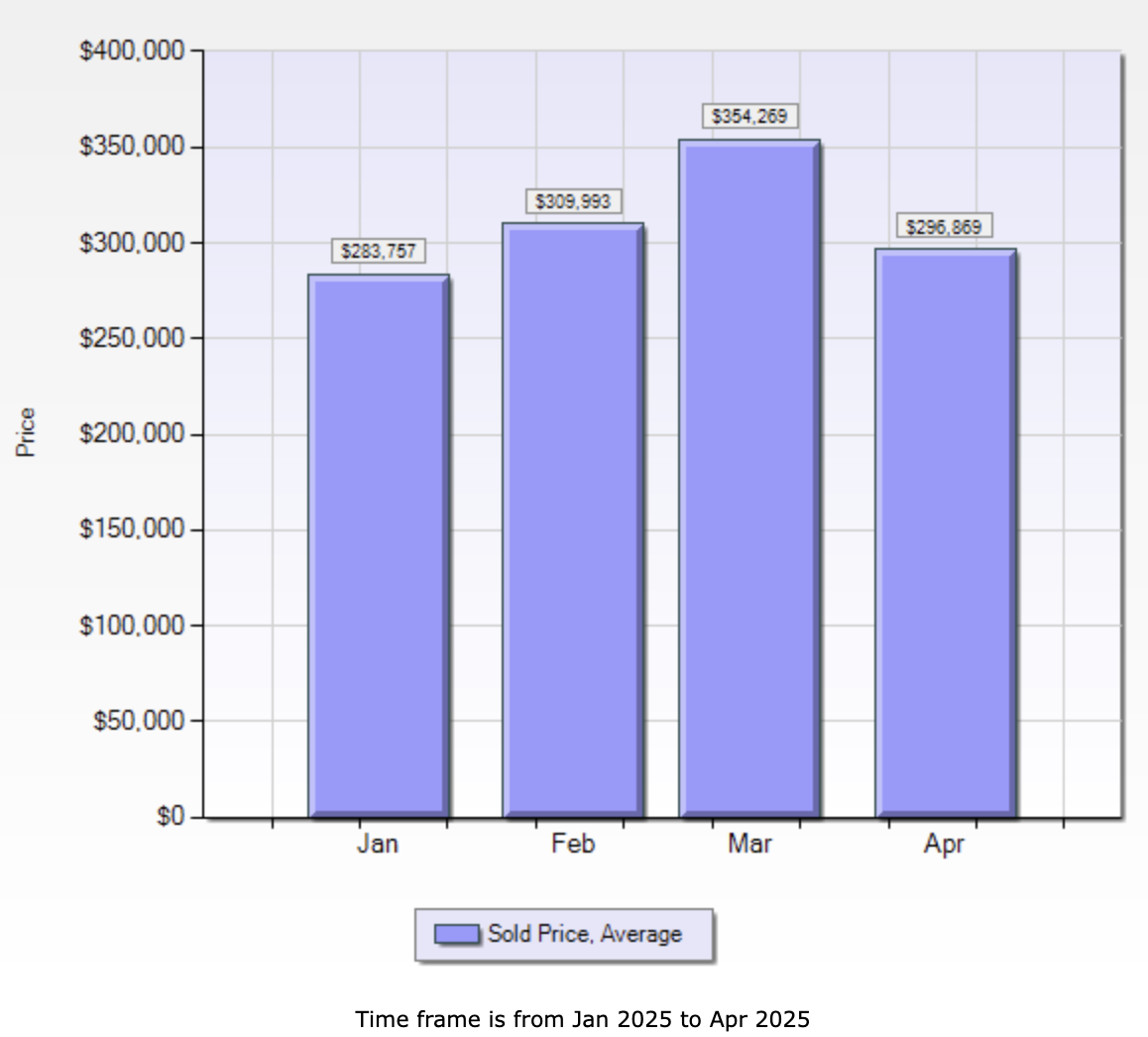
  • Median Price: $296,450
  • Days to Sell: 53
  • New Listings: 37

Condo activity remains light, but prices are stable. This segment continues to appeal to downsizers and investors looking for simpler, lower-maintenance properties in central areas.

Townhomes

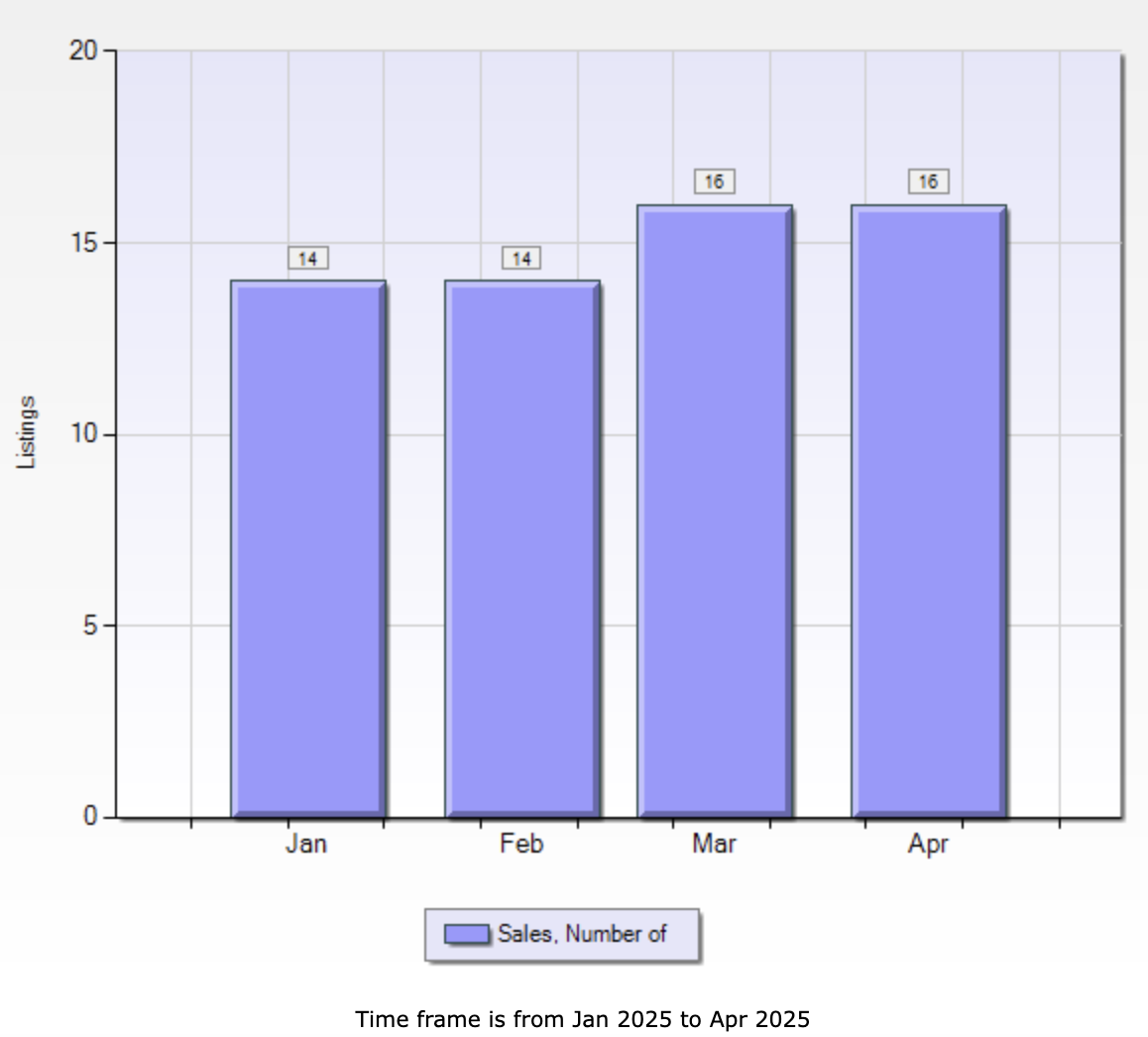
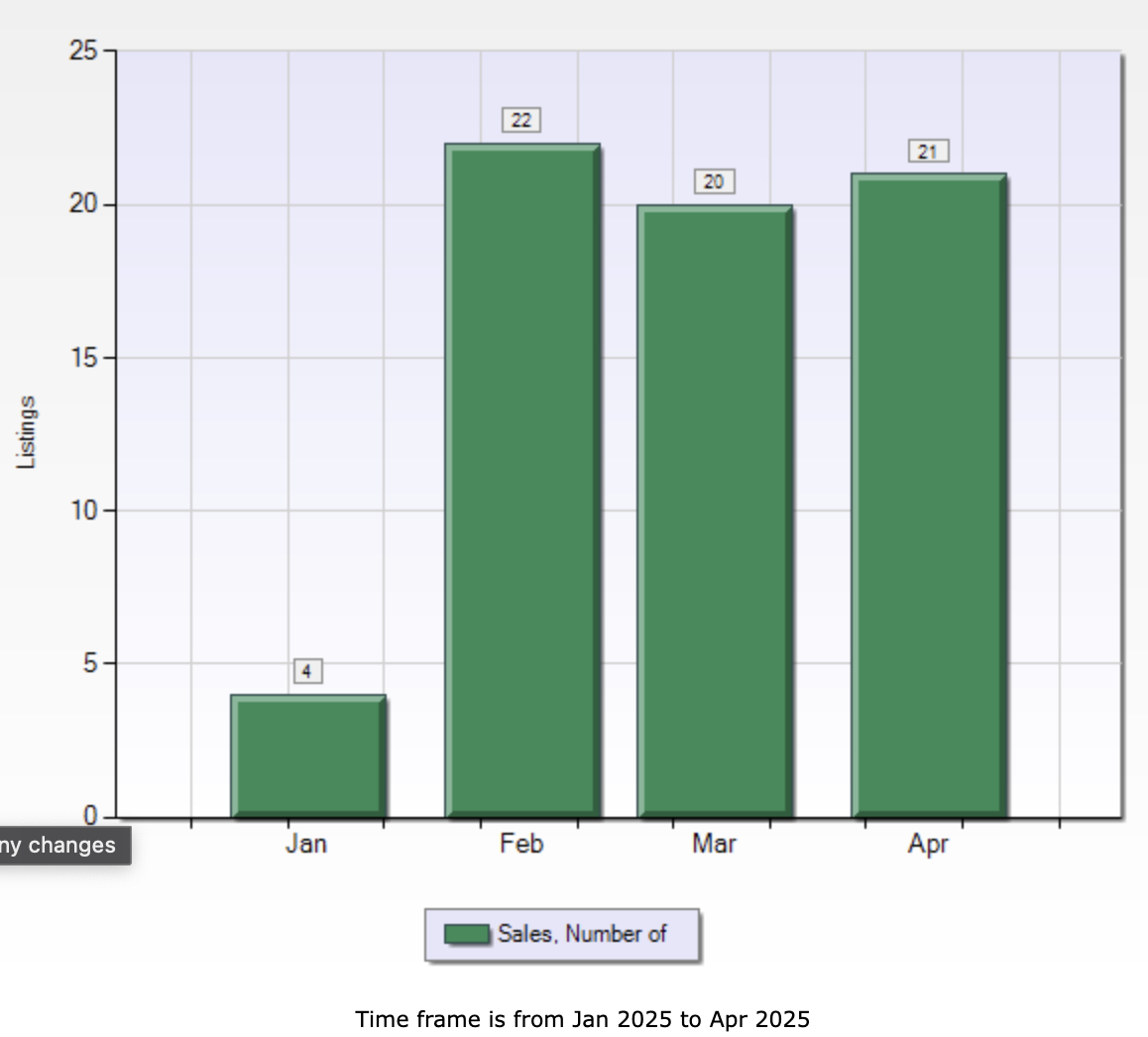
  • Sales: 21
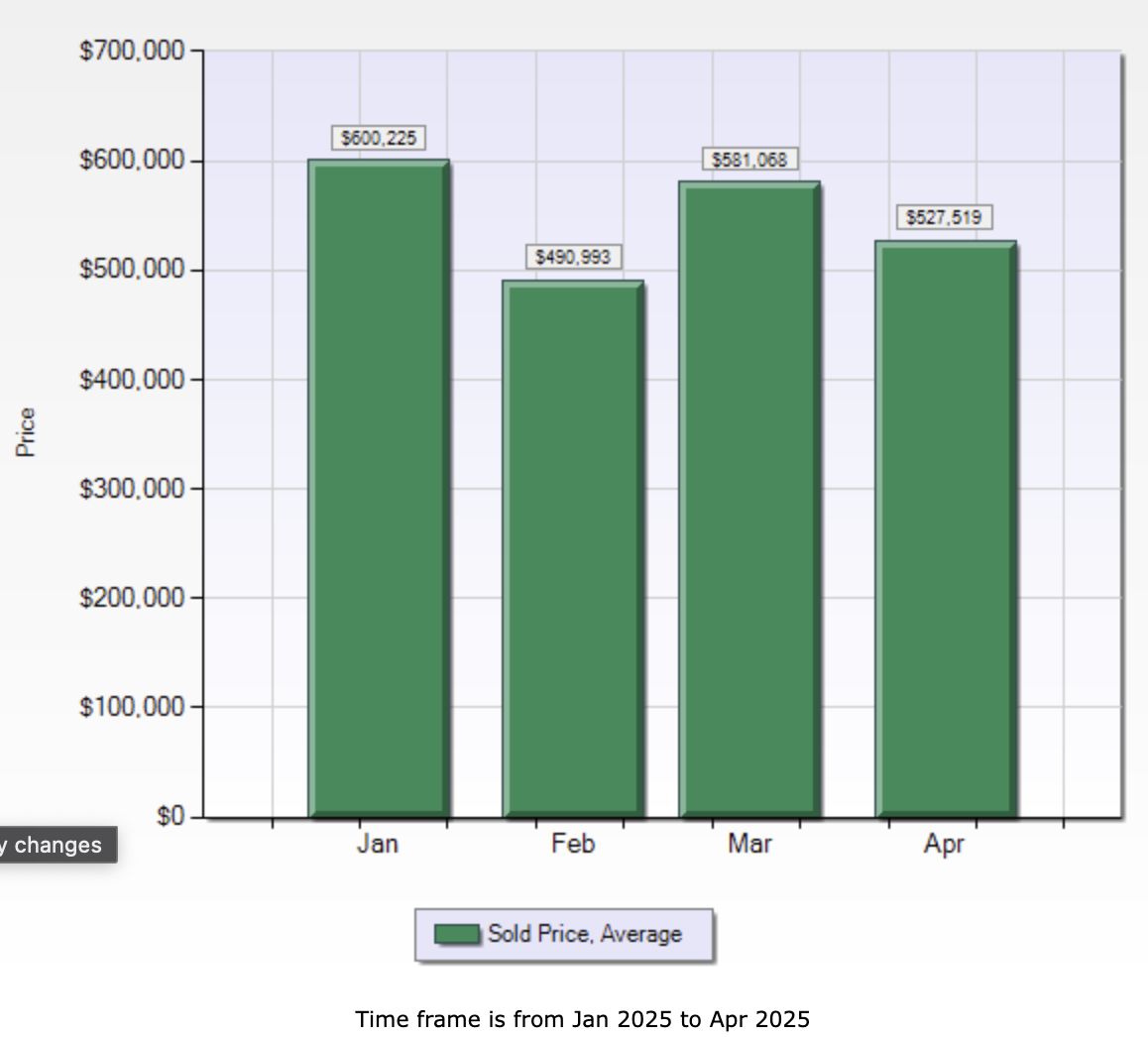
  • Average Price: $527,519
  • Median Price: $512,500
  • Days to Sell: 45
  • New Listings: 54

Townhomes saw steady movement with 21 sales in April. Inventory levels remain manageable, and demand is consistent among families and retirees alike.

Notable Trends

  • Benchmark price for single-family homes: $731,000
  • Sales-to-inventory ratio across all residential types: 11%
  • Total residential inventory: 988
  • Strong list/sell ratios across all property types: remain above 95%

What This Means

The North Okanagan market continues to offer balance—fewer bidding wars, more informed buyers, and fair expectations from sellers. If you're preparing to enter the market, timing and strategy still matter. Sellers should focus on clean presentation and realistic pricing. Buyers have more inventory to choose from but need to act decisively when the right home appears.

Need a breakdown by property type or neighborhood?
Get in touch for a personalized market analysis or to get matched with current listings.

Graphics

These graphics are from The Association of Interior Realtors. They highlight the HPI trends. Understanding them—and knowing what to do next—is where I come in. If you're thinking of buying or selling, let’s talk about what these numbers mean for you.

Total Sales

Total Active Listings

Average Days To Sell

Single Family Homes

Condos

Towhomes