By Michael A. Jones - PREC* | Royal LePage Kelowna
New to the Okanagan? My guide to moving to Kelowna and the Okanagan puts all my relocation articles in one place.
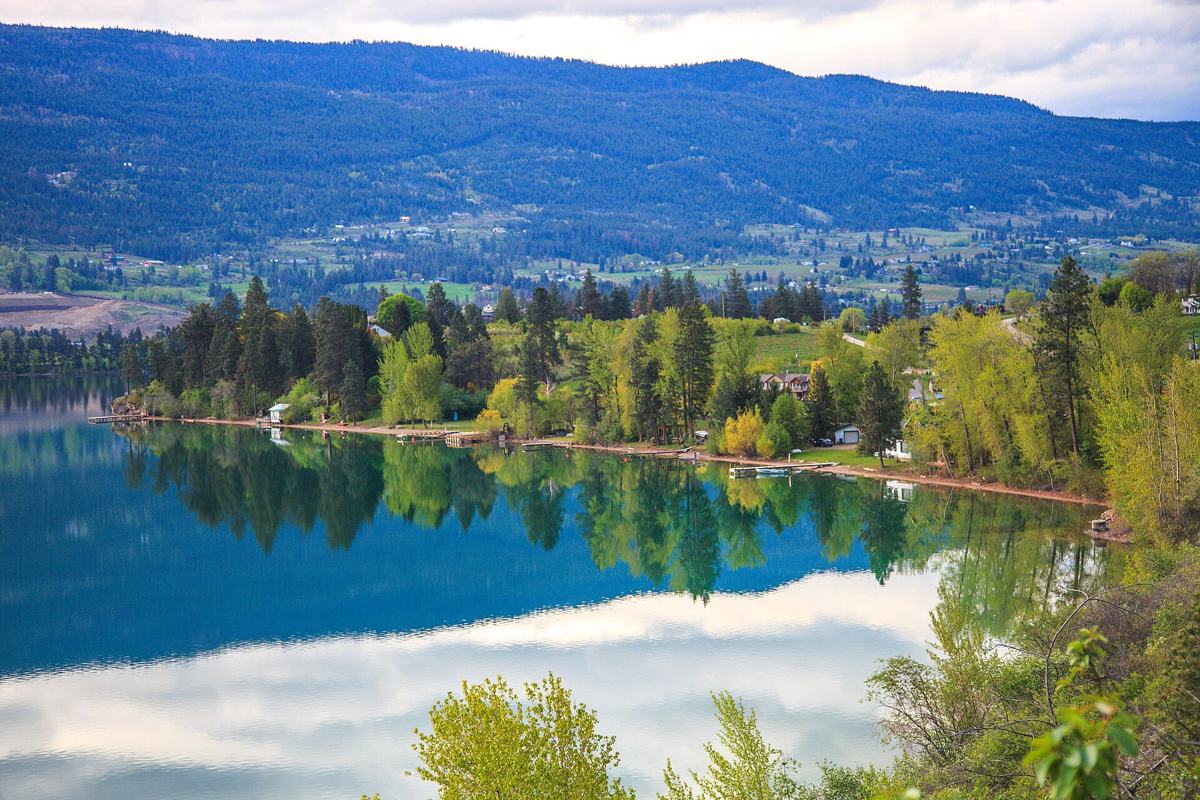
Buying lakefront property in the Okanagan is the dream that brings a lot of people to the valley, especially retirees and buyers relocating from Alberta and the Lower Mainland. But the Okanagan is not one lake. From Swan and Kalamalka in the north to Skaha and Osoyoos in the south, each lake has its own water, rules and risks. Here is a plain look at the lakes, the benefits and the drawbacks before you fall in love with a dock.
The Okanagan lakes at a glance
Sizes and depths below come from the province's Okanagan large lakes water quality report unless noted. All of the main valley lakes are also drinking water sources, and the Okanagan Basin Water Board has been controlling invasive Eurasian watermilfoil in them since the 1970s, so some weeds near shore are normal.
Okanagan Lake
The big one: about 351 square km and up to 230 m deep, running past Vernon, Lake Country, Kelowna, West Kelowna, Peachland, Summerland, Naramata and Penticton. Deep, cold water and lots of boat traffic in summer. Its water level is managed by a dam at Penticton, and it set a record flood in 2017 (more below).
Kalamalka Lake
About 26 square km and up to 142 m deep, between Vernon, Coldstream and Lake Country. It is a marl lake: in summer, calcium carbonate crystals form and turn the water turquoise and green. Clear, cool water and a lot of parkland on the east side.
Wood Lake
About 9 square km and 34 m at its deepest, in Lake Country between Winfield and Oyama, joined to Kalamalka by the Oyama Canal. Warmer and greener than Kal. A 2023 report for Lake Country rates it meso-eutrophic with more frequent algae blooms since the mid-2000s. The provincial synopsis notes a 10 km/h speed limit on parts of the lake.
Ellison (Duck) Lake
A small, shallow lake of about 2 square km with an average depth of 2.5 m, between Kelowna's airport area and Lake Country. It warms quickly, but the province calls it eutrophic with poor water clarity. Much of its lakefront community is run by a leaseholders association, so check whether you are buying freehold or a lease.
Swan Lake
A shallow lake on the north edge of Vernon with a mean depth of about 5.6 m, ringed by farmland and highway commercial. An Okanagan Basin Water Board study found nutrient loading and summer cyanobacteria blooms. Lakefront here is more about quiet and birdlife than swimming.
Skaha Lake
About 20 square km and up to 55 m deep, between Penticton, Kaleden and Okanagan Falls. Warmer than Okanagan Lake, with sandy beaches at the Penticton end. Speed limits or no-boat zones are buoyed and signed in several spots.
Vaseux Lake
A small lake south of Okanagan Falls that is a migratory bird sanctuary. No motorized boats, including electric surfboards, are allowed. Peaceful, but not for boaters.
Osoyoos Lake
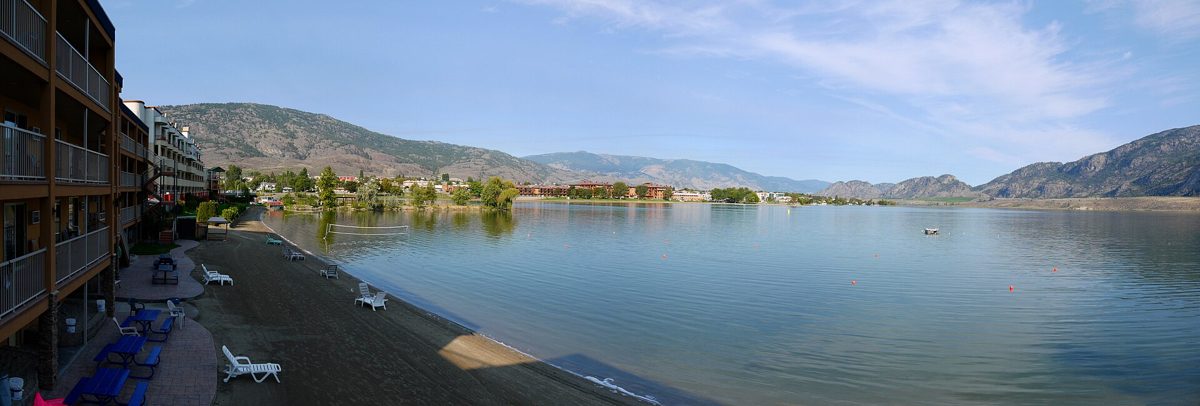
About 23 square km, up to 63 m deep, and shared with Washington State. The Town of Osoyoos calls it Canada's warmest freshwater lake, averaging about 24 C in July and August. Desert hills, vineyards and a long season, with more summer visitors to match.
The benefits of Okanagan lakefront property
1. The lifestyle is the point
Swimming off your own shore, a paddleboard before breakfast, the boat ten steps from the patio, and grandkids who actually want to visit. For many 55+ buyers, lakefront is less about the house and more about how the days feel.
2. Fresh water, not salt
Okanagan lakes are fresh water, so you avoid the salt air that is hard on boats, metal railings and outdoor furniture on the ocean. There are no tides to plan around, and the southern lakes get warm enough for long swims. Compared with ocean waterfront on the coast, the trade-offs are a shorter boating season, winter ice on some smaller lakes, and water levels that rise with spring runoff.
3. A lake for every style
Deep and busy, clear and turquoise, warm and sandy, or small and quiet: the valley offers real choice. Matching the lake to how you want to live matters as much as the house.
4. Scarcity
There is only so much shoreline, and much of it is parks, public beaches, First Nations land or already built on. Limited supply is part of why lakefront has held its appeal with buyers. That is not a guarantee of future prices, but it is a real feature of the market.
The drawbacks and what to check
5. Docks are a permission, not a right
On most Okanagan lakes the lake bed in front of a lot is provincial Crown land. Under the province's private moorage rules, a single private dock can qualify for a General Permission with no application, but only if it meets every condition: one dock, owned by the upland owner, private use, no fill or dredging, and no boathouse, shed or hot tub on it. Anything else, including lake docks over 24 m, needs a Specific Permission through FrontCounter BC. A permission gives no rights to the land and can be withdrawn, so ask the seller how the existing dock is authorized. Leasehold lakefront can have its own dock rules on top of these.
6. Setbacks are local
The provincial Riparian Areas Protection Regulation looks at a 30 m assessment area along lakes and streams, and each municipality or regional district then sets its own rules. Kelowna's Official Community Plan sets a 15 m minimum riparian area on Okanagan Lake. Coldstream uses watercourse development permits on Kalamalka Lake, Penticton maps a riparian development permit area on Okanagan and Skaha lakes, and the Regional District of Okanagan-Similkameen requires a watercourse development permit in rural areas around the southern lakes. Lake Country, Vernon, West Kelowna and Osoyoos have their own rules too. If you plan to rebuild closer to the water or add a big patio and beach, ask the local planning office first.
7. The lakes go up
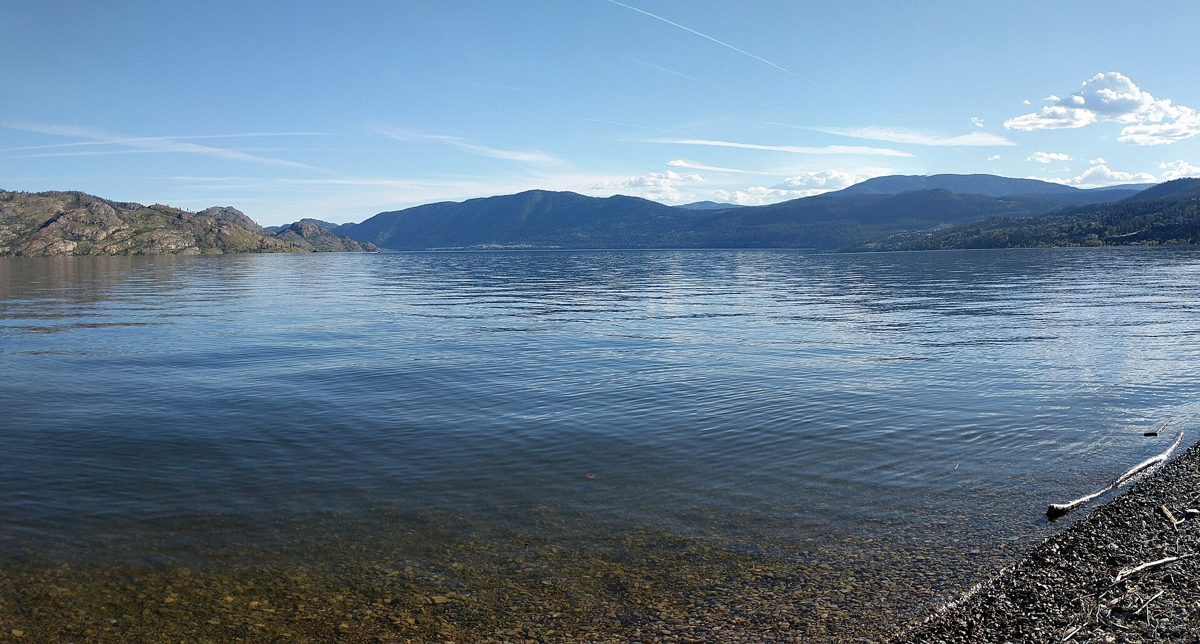
In June 2017 Okanagan Lake peaked at 343.25 m, its highest level since the regulation dam was built in the 1950s, according to the province's 2017 flood report. Normal full pool is 342.48 m. The Okanagan Basin Water Board calls it the largest recorded flood on the lake, and the basin flooded again in 2018. Lakes downstream and smaller lakes have their own flood history. Ask about past water in the basement, sandbagging, the height of the main floor and how the home is insured for overland flooding.
8. Water quality and weeds vary
Deep lakes like Okanagan and Kalamalka stay clearer, while shallow lakes such as Ellison and Swan, and at times Wood, see more algae and weeds. If you plan to swim or draw water from the lake, read the lake's monitoring reports and check Interior Health advisories.
9. Wildfire and insurance
Lakefront does not mean fireproof. In the 2023 McDougall Creek wildfire, 189 properties had significant to full loss, many of them lake-adjacent homes on the west side of Okanagan Lake. Talk to an insurance broker before you remove subjects. Our wildfire insurance guide for Kelowna buyers covers what to ask.
10. Higher costs to carry
Lakefront usually means a higher purchase price, higher property taxes and more upkeep: retaining walls, docks, lifts, irrigation and storm damage. If the property will sit empty part of the year, the speculation and vacancy tax applies in Kelowna, West Kelowna, Lake Country, Peachland, Penticton, Vernon, Summerland, Coldstream and other areas. Canadian citizens and permanent residents generally owe 1% unless an exemption applies, and foreign owners pay more. Non-Canadians should also know the federal ban on buying residential property runs to January 1, 2027.
11. Privacy and public use
Summer on the bigger lakes is busy. Boats, wakes, noise and people walking the foreshore are part of the deal. The province expects private docks to allow reasonable public passage along the shore, and you generally own down to the natural boundary, not the beach below it. Visit on a hot July weekend, not just a quiet October morning.
12. Resale takes the right buyer
The buyer pool for a high-end lakefront home is smaller than for a typical house, so it can take longer to sell. Leasehold title, non-permitted structures, poor water quality or flood history can narrow it further. Buy with your exit in mind, and check what is planned nearby. See how to check development next door.

Is lakefront right for retirement?
It can be. The best fit is usually a buyer who loves being on the water daily, has the budget for the extras, and is fine with some rules and some risk. If stairs down to the beach or a long dock to maintain will be hard in 10 years, consider lake-view homes, strata units with shared waterfront, or a home near a public beach. If you are also selling a family home, read sell first or buy first when downsizing in Kelowna.
Okanagan lakefront property: common questions
Which Okanagan lake is the warmest?
The Town of Osoyoos describes Osoyoos Lake as Canada's warmest freshwater lake, with water averaging about 24 C in July and August. Smaller, shallower lakes such as Ellison and Swan also warm up quickly, but they tend to have more algae.
Can I use a motorboat on every lake in the Okanagan?
No. Powered boats are not allowed on Vaseux Lake, which is a migratory bird sanctuary, and several smaller lakes are electric motor only. Wood Lake has a 10 km/h limit on parts of the lake, and Skaha, Okanagan, Kalamalka and Osoyoos have buoyed swim areas where boats are limited or banned. Check the posted rules for the lake you are buying on.
Can I build a dock on Okanagan lakefront?
Often, yes. On most lakes the lake bed in front of a lot is provincial Crown land. A single private dock can fall under the province's General Permission with no application if it meets every condition, such as one dock, private use only, no fill or dredging and no boathouse. Otherwise you apply for a Specific Permission through FrontCounter BC. The permission gives no rights to the land and can be withdrawn.
How close to the lake can I build in the Okanagan?
It depends on the municipality or regional district. The provincial Riparian Areas Protection Regulation looks at a 30 m assessment area along lakes and streams, and local governments add their own rules. Kelowna sets a 15 m minimum riparian area on Okanagan Lake, while Coldstream, Penticton and the Regional District of Okanagan-Similkameen use their own development permit areas. Ask the local planning office before you buy.
Thinking about lakefront?
I can help you compare lakes and weigh the property, the dock, the shoreline rules and the risks before you write an offer. Send me a message or call 250-258-4663. For more on retiring here, see the Okanagan retirement housing guide.
Filed under: Buyers, Retirement, Kelowna Lifestyle
This article provides general information, not legal, tax, insurance or financial advice. Rules and rates change, so confirm details with the province, your municipality or regional district and qualified professionals before you buy. Michael A. Jones is a REALTOR® with Royal LePage Kelowna, not a lawyer, insurance broker or environmental professional. Prepared with AI assistance; sources checked Oct 30, 2026.
*Personal Real Estate Corporation