Home Intelligence
By Michael A. Jones - PREC* | Royal LePage Kelowna
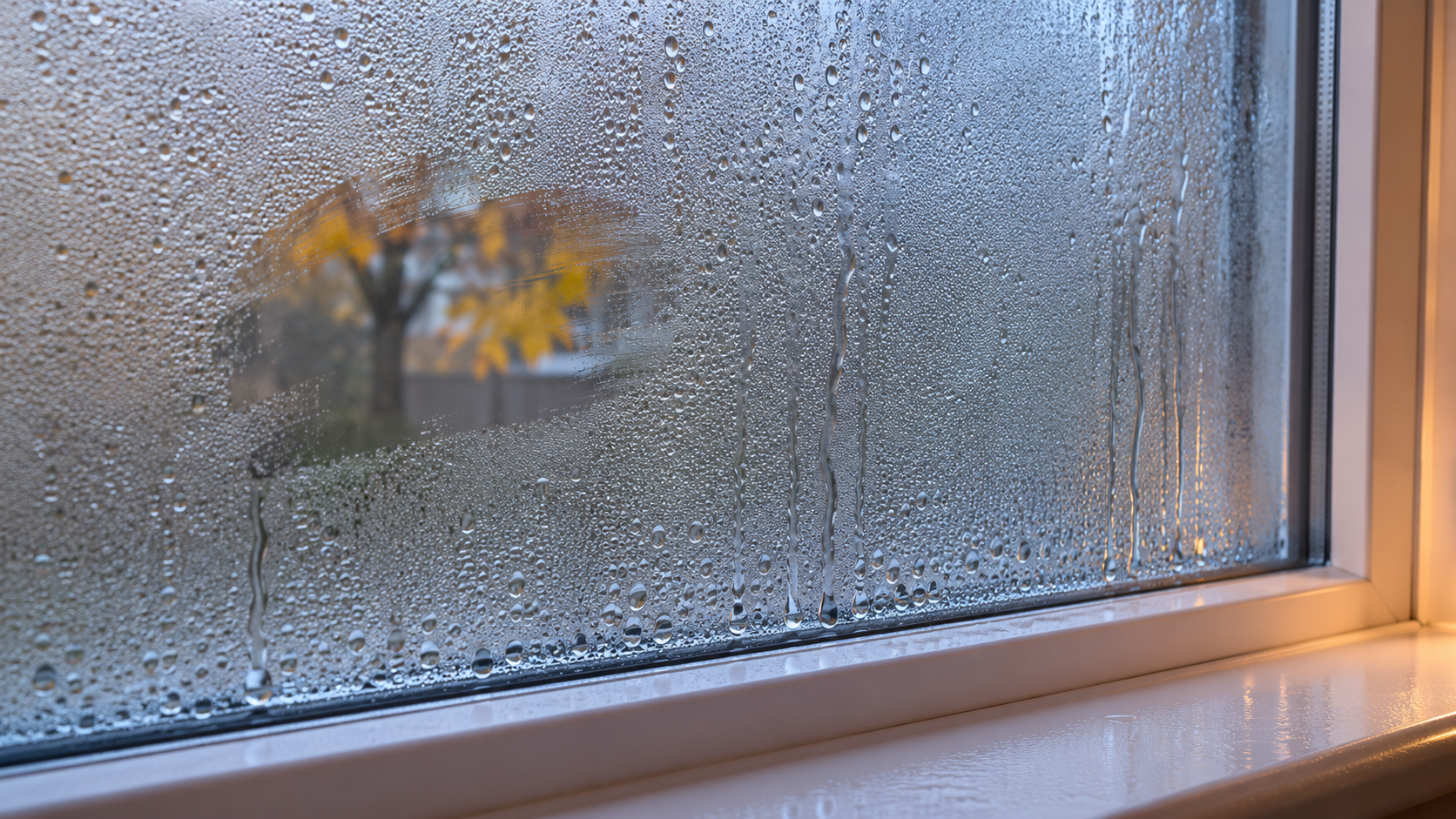
A foggy window is a reason to look more closely before deciding what to repair. The useful first question is simple: where is the water?
For a Kelowna homeowner, that observation can turn a vague concern into a better conversation with a window specialist or home inspector. Moisture on the room side, on the outdoor surface and within a sealed glass unit points you toward different next steps.
Start with the location
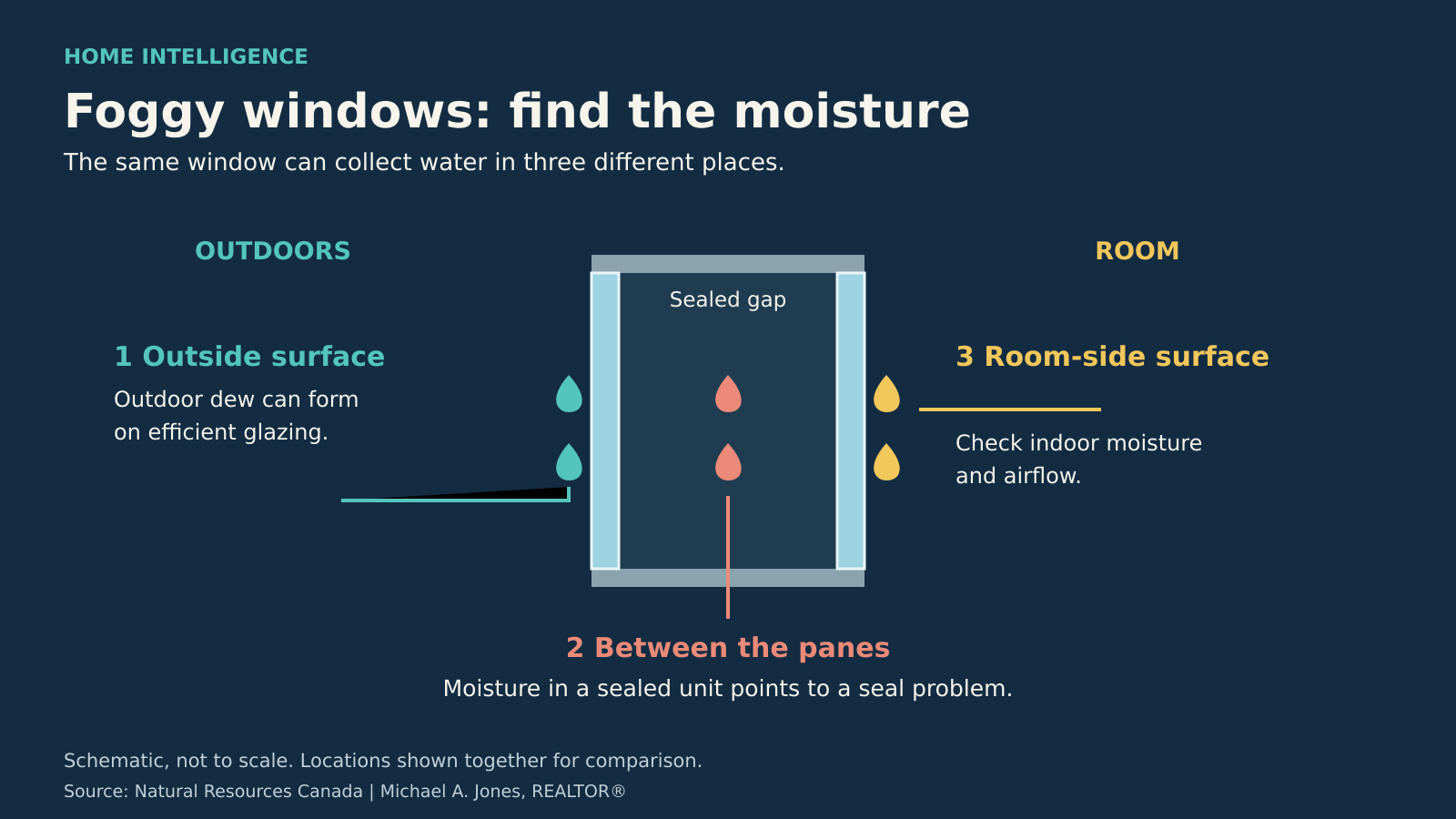
Room-side glass: moist indoor air can condense against a cold surface. Colder weather, higher indoor humidity and restricted airflow near the window increase the risk. Closed blinds or furniture can keep warm air from reaching the glass.
Outside surface: dew can form on efficient glazing after a cool, calm, humid night. Exterior droplets alone do not establish that the window needs replacing.
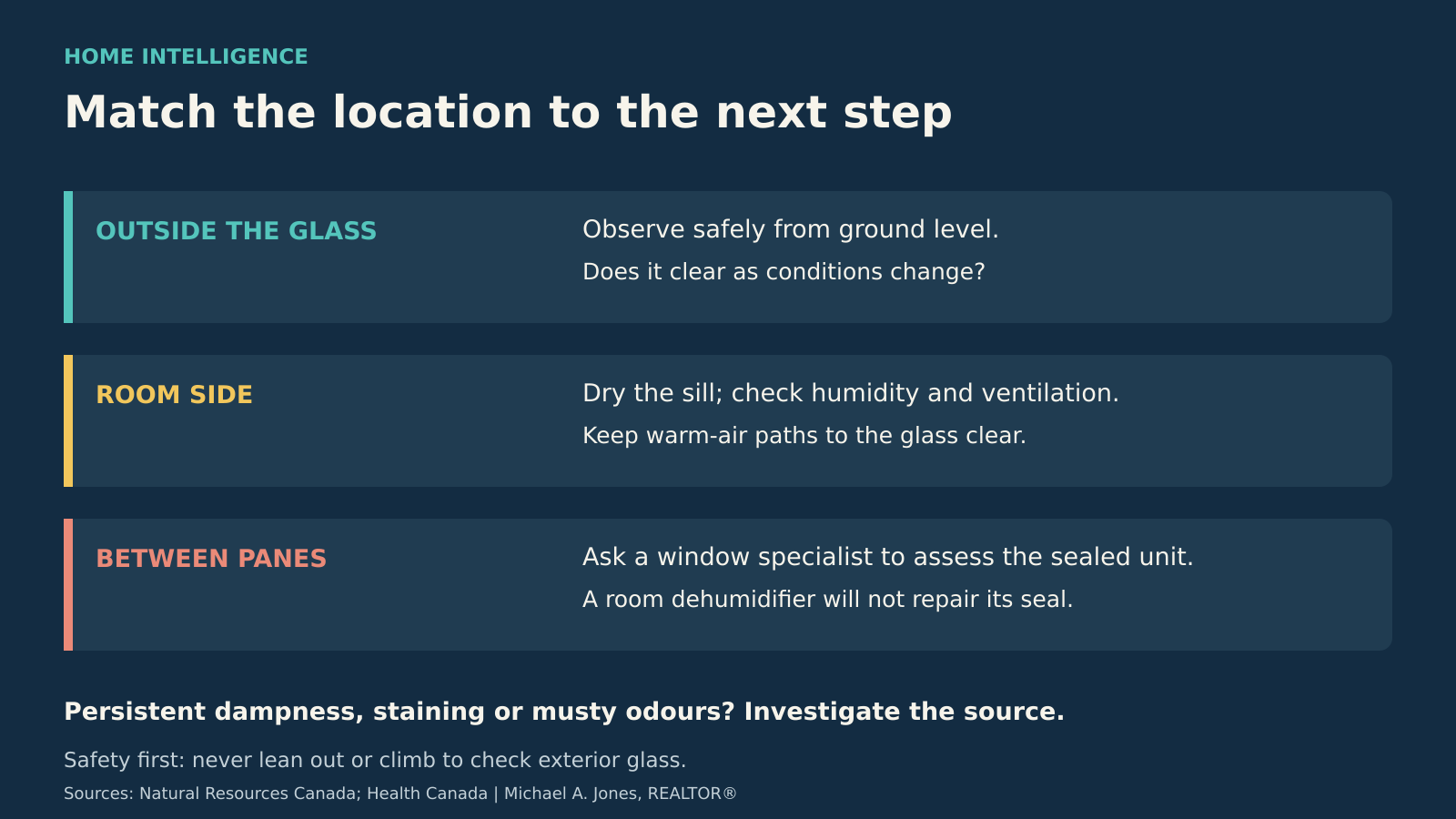
Between panes: moisture inside a sealed insulating glass unit points to a failed seal. Ask a window specialist to assess the unit and explain the repair or replacement options.
These distinctions come from Natural Resources Canada's condensation guidance. They apply to sealed glazing; an older separate storm-window assembly needs its own assessment.
Make a useful record
If the inside glass is safely accessible, gently wipe a small area. If the haze remains, do not jump straight to a diagnosis: the outdoor face may be wet too. Never lean out or climb to inspect exterior glass.
Take a photo before wiping and note:
- Which window and which surface appear affected.
- Whether it happens after showers or cooking, overnight, or during rain.
- Whether one window or several show the same pattern.
- Whether the moisture clears, returns or leaves the sill wet.
That short record gives the person assessing the window something more useful than "it gets foggy." If you cannot locate the moisture confidently, say so rather than guessing.
For indoor moisture, check the routine
Health Canada recommends controlling moisture, using bathroom and kitchen exhaust ventilation, allowing warm air to reach windows, and drying wet frames and sills. A hygrometer can help you monitor indoor relative humidity; its general guidance is 30% to 50%, but that range does not guarantee every window will remain dry in cold weather.
Repeated condensation is worth addressing even when the glass itself is sound. Keep a note of what you changed and whether it helped. Avoid covering up damp trim before understanding why it is wet.
Know when the issue needs a closer look
Staining, musty smells, recurring mould or a moisture source you cannot explain deserve qualified assessment. Health Canada advises professional help when mould returns after cleaning or hidden contamination is suspected. Cleaning the visible surface will not resolve an ongoing water source.
Water arriving during rain may also call for investigation of leakage rather than an assumption that condensation explains everything.
If you are buying or preparing to sell
Ask for any window assessments, repair invoices and warranty information. If replacement is recommended, ask what is being replaced: the glass unit, the sash or the complete window. Compare quotes on the same scope.
A foggy pane should become a question with an answer. For buyers, raise it during due diligence. For sellers, understanding it early helps you plan repairs and explain the home's condition accurately.
For a broader preparation checklist, read Selling Next Spring? Start With These Fall Home Checks. Explore more Home Owners advice or contact Michael about your Kelowna home plans.
All for now,
Michael
General home-maintenance information, not a diagnosis or a substitute for a qualified window, building-envelope or mould assessment. Diagrams are simplified and not to scale. Confirm the cause before choosing repairs. Sources checked November 11, 2026.
*Personal Real Estate Corporation